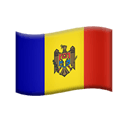
flag: Moldova

πŸ‡²πŸ‡©

flag: Moldova

πŸ‡²πŸ‡© represents the flag of Moldova, which features three vertical bands of blue, yellow, and red with a centered coat of arms. Some designs appear flat and static while others add folds, shading, or wave-like motion to simulate a flag in the wind.

Moldova is a landlocked country in Eastern Europe known for its rich viticulture and ancient monasteries. The central coat of arms depicts a golden eagle with a red and blue shield on its breast, representing the national identity and the historical aurochs symbol.

This emoji is commonly used to denote geographical location or cultural heritage in social media bios. It is also frequently seen in posts regarding international diplomacy, tourism, or European sports competitions.
Groups
Subgroups
Unicode
U+1F1F2 U+1F1E9
Variant status
Fully-qualified
Emoji version
E2.0

You may also want to check out

Related emojis that share similar meanings or usage.

πŸ‡·πŸ‡΄
flag: Romania

πŸ‡·πŸ‡΄ represents the flag of Romania, which consists of three vertical bands of blue, yellow, and red. Some designs appear flat and static while others add folds, shading, or wave-like motion to simulate a flag in the wind. Romania is located in Southeastern Europe and is famous for its diverse geography and the medieval architecture of the Transylvania region. The blue, yellow, and red bands symbolize the historical union of provinces, representing the strength and heritage of the nation through simple yet bold vertical stripes. This emoji is commonly used to celebrate Romanian national holidays or to show support for the country during global sporting events. It is also frequently seen in digital content related to European tourism and cultural identity.

πŸ‡ΊπŸ‡¦
flag: Ukraine

πŸ‡ΊπŸ‡¦ represents the flag of Ukraine, which consists of two equal horizontal bands of blue and yellow. Some designs appear flat and static while others add folds, shading, or wave-like motion to simulate a flag in the wind. Ukraine is a vast nation in Eastern Europe known for its expansive plains. The blue band symbolizes the sky, while the yellow band represents the vast wheat fields that define the landscape. This combination serves as a primary national identifier and a symbol of the country's agricultural importance. This emoji is commonly used to express cultural pride and to mark location during international events. It is often used in social media bios or news updates to denote geographical context or solidarity.

πŸ‡±πŸ‡Ή
flag: Lithuania

πŸ‡±πŸ‡Ή represents the flag of Lithuania, which uses three horizontal bands of yellow, green, and red. Some designs appear flat and static while others add folds, shading, or wave-like motion to simulate a flag in the wind. Lithuania is a Baltic nation known for its lush landscapes and deep historical roots. The yellow band signifies the sun and golden fields, the green represents the country’s vast forests, and the red stands for the courage and blood of those who fought for freedom. These colors form a distinct tricolor layout that is easily recognizable in international contexts. This emoji is commonly used to express national pride or to denote a geographical connection to the region. It is often used in social media bios, sports discussions, and travel-related content to highlight Lithuanian identity.

πŸ‡·πŸ‡Ί
flag: Russia

πŸ‡·πŸ‡Ί represents the flag of Russia, which features three equal horizontal bands of white, blue, and red. Some designs appear flat and static while others add folds, shading, or wave-like motion to simulate a flag in the wind. Russia is the largest country in the world by land area, spanning across Eastern Europe and Northern Asia. The horizontal tricolor layout uses white to symbolize nobility, blue for loyalty, and red for courage, serving as a primary national symbol for its citizens and the global community. This emoji is often used to denote national identity, cultural topics, or geographical locations. It frequently appears in contexts involving international athletics, traditional arts, or travel documentation.

πŸ‡²πŸ‡±
flag: Mali

πŸ‡²πŸ‡± represents the flag of Mali, which is a vertical tricolor of green, yellow, and red. Some designs appear flat and static while others add folds, shading, or wave-like motion to simulate a flag in the wind. Mali is a large West African nation where the green stripe stands for the fertility of the land, yellow represents mineral wealth, and red honors the struggle for sovereignty. These Pan-African colors are shared by several neighboring countries, reflecting a collective historical bond and regional identity. This emoji is commonly used to denote Malian heritage or to mark locations within the country during travel. It also appears frequently in sports discussions and cultural exchanges involving West African traditions.