flag: Lithuania

๐Ÿ‡ฑ๐Ÿ‡น

flag: Lithuania

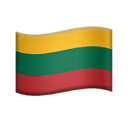
๐Ÿ‡ฑ๐Ÿ‡น represents the flag of Lithuania, which uses three horizontal bands of yellow, green, and red. Some designs appear flat and static while others add folds, shading, or wave-like motion to simulate a flag in the wind.

Lithuania is a Baltic nation known for its lush landscapes and deep historical roots. The yellow band signifies the sun and golden fields, the green represents the countryโ€™s vast forests, and the red stands for the courage and blood of those who fought for freedom. These colors form a distinct tricolor layout that is easily recognizable in international contexts.

This emoji is commonly used to express national pride or to denote a geographical connection to the region. It is often used in social media bios, sports discussions, and travel-related content to highlight Lithuanian identity.
Groups
Subgroups
Unicode
U+1F1F1 U+1F1F9
Variant status
Fully-qualified
Emoji version
E2.0

You may also want to check out

Related emojis that share similar meanings or usage.

๐Ÿ‡ฑ๐Ÿ‡ป
flag: Latvia

๐Ÿ‡ฑ๐Ÿ‡ป represents the flag of Latvia, which features a horizontal three-band layout with deep red on the top and bottom and a narrower white stripe in the middle. Some designs appear flat and static while others add folds, shading, or wave-like motion to simulate a flag in the wind. Latvia is a Baltic nation where this national identity symbol is highly revered; the dark red color is said to represent the blood of a wounded leader and the white stripe the sheet that wrapped him. This specific color, often called 'Latvian red,' is a defining visual element that sets it apart from other red-and-white flags. This emoji is often used to show support for the country during sports matches or to signify a location in the Baltic region. It is also a common way to denote heritage or residence in digital communication.

๐Ÿ‡ต๐Ÿ‡ฑ
flag: Poland

๐Ÿ‡ต๐Ÿ‡ฑ represents the flag of Poland, which contains two horizontal bands of white on the top and red on the bottom. Some designs appear flat and static while others add folds, shading, or wave-like motion to simulate a flag in the wind. Poland is a Central European country with a deep history, and these national colors have been officially recognized since the early 19th century. The white band symbolizes the white eagle of the coat of arms, while the red represents the traditional shield color, together forming a powerful identity symbol for the nation. This emoji is commonly used to denote Polish heritage, cultural events, or geographical locations. It is often used in sports contexts to cheer for national teams or to mark travel itineraries involving the Baltic region.

๐Ÿ‡ธ๐Ÿ‡ฐ
flag: Slovakia

๐Ÿ‡ธ๐Ÿ‡ฐ represents the flag of Slovakia, which consists of horizontal bands of white, blue, and red with a coat of arms positioned toward the left. Some designs appear flat and static while others add folds, shading, or wave-like motion to simulate a flag in the wind. Slovakia is a Central European nation famous for its high mountain ranges and historical architecture. The coat of arms depicts a white double cross on a red shield, standing on three blue peaks that represent the mountainous landscape central to the country's identity. This emoji is often used to show national pride during sporting competitions or to signify travel and cultural topics related to the region. It serves as a clear marker for geographic and political contexts involving the Slovak Republic.

๐Ÿ‡ช๐Ÿ‡ช
flag: Estonia

๐Ÿ‡ช๐Ÿ‡ช represents the flag of Estonia, which consists of three horizontal bands of blue, black, and white. Some designs appear flat and static while others add folds, shading, or wave-like motion to simulate a flag in the wind. Estonia is a Northern European country located on the eastern coast of the Baltic Sea. The blue band symbolizes the sky and loyalty, the black reflects the dark soil and the nation's past, and the white represents the snow and the search for light. These national colors are deeply rooted in the country's landscape and folklore. This emoji is often used to denote national identity in sports, travel, and cultural exchanges. It is frequently seen in discussions regarding the country's advanced digital society and its unique geography.

๐Ÿ‡ธ๐Ÿ‡ฎ
flag: Slovenia

๐Ÿ‡ธ๐Ÿ‡ฎ represents the flag of Slovenia, which consists of three horizontal bands in white, blue, and red with a coat of arms in the upper left. Some designs appear flat and static while others add folds, shading, or wave-like motion to simulate a flag in the wind. Slovenia is a Central European nation situated at the crossroads of the Alps and the Mediterranean. The coat of arms on the flag depicts Mount Triglav, the country's highest mountain, while the blue wavy lines signify the Adriatic Sea and local rivers. This emoji is a standard tool for indicating national identity in digital spaces. It is often used to represent the Slovenian language, celebrate achievements in international sports, or document travel itineraries through the region.