flag: Eritrea

๐Ÿ‡ช๐Ÿ‡ท

flag: Eritrea

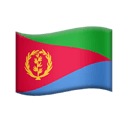
๐Ÿ‡ช๐Ÿ‡ท represents the flag of Eritrea, which uses a large red triangle flanked by green and blue triangles, with a yellow wreath on the left. Some designs appear flat and static while others add folds, shading, or wave-like motion to simulate a flag in the wind.

Eritrea is a coastal nation in Northeast Africa, and its flag reflects this geography with blue for the sea and green for the land. The central red section honors the national struggle, while the yellow olive branch serves as a peace symbol adopted from historical emblems.

This emoji is commonly used to express pride in Eritrean heritage or to denote the country in global contexts. It is often used in discussions about African history, regional travel, or international athletic competitions.
Groups
Subgroups
Unicode
U+1F1EA U+1F1F7
Variant status
Fully-qualified
Emoji version
E2.0

You may also want to check out

Related emojis that share similar meanings or usage.

๐Ÿ‡ช๐Ÿ‡น
flag: Ethiopia

๐Ÿ‡ช๐Ÿ‡น represents the flag of Ethiopia, which shows horizontal stripes of green, yellow, and red with a blue circle and a yellow star at the center. Some designs appear flat and static while others add folds, shading, or wave-like motion to simulate a flag in the wind. Ethiopia is a prominent nation in the Horn of Africa, and its flag colors have influenced many other flags across the continent. The green, yellow, and red bands signify hope, peace, and the blood shed for freedom, while the central blue disk and radiating star represent national unity and the equality of all ethnic groups. It is often used to celebrate Ethiopian culture, mark national achievements in sports, or denote geographical locations in East Africa. This emoji is a common way to signal respect for the countryโ€™s long-standing independence and historical significance.

๐Ÿ‡ฆ๐Ÿ‡ท
flag: Argentina

๐Ÿ‡ฆ๐Ÿ‡ท represents the flag of Argentina, which features three horizontal bands of light blue and white with a golden sun in the center. Some designs appear flat and static while others add folds, shading, or wave-like motion to simulate a flag in the wind. Argentina is a large South American country famous for its vast plains and cultural influence. The central Sun of May is a core historical emblem representing the sun breaking through the clouds during the May Revolution, while the blue and white bands reflect the national colors established during the struggle for independence. This emoji is commonly used to denote national identity or to show support during major sporting events. It is often used in social media bios or travel posts to signify a connection to Argentine culture and geography.

๐Ÿ‡ฆ๐Ÿ‡ด
flag: Angola

๐Ÿ‡ฆ๐Ÿ‡ด represents the flag of Angola, which displays two horizontal bands of red and black with a yellow central emblem of a partial gear, a machete, and a star. Some designs appear flat and static while others add folds, shading, or wave-like motion to simulate a flag in the wind. Angola is a nation in Southern Africa known for its vast natural resources and diverse landscape. The red band signifies the blood of those who fought for independence, while the black band represents Africa; the central emblem specifically highlights the role of workers and peasants through the gear and machete symbols. This emoji is commonly used to express national identity in social media bios or to represent the country in international sports and diplomatic discussions. It is often used by those traveling to the region or celebrating Angolan cultural holidays.

๐Ÿ‡จ๐Ÿ‡ฒ
flag: Cameroon

๐Ÿ‡จ๐Ÿ‡ฒ represents the flag of Cameroon, which features three vertical stripes of green, red, and yellow with a yellow five-pointed star in the center. Some designs appear flat and static while others add folds, shading, or wave-like motion to simulate a flag in the wind. Cameroon is a Central African nation known for its diverse terrain and rich wildlife. The green stripe represents the lush vegetation of the south, the red symbolizes unity, and the yellow stands for the sun and the savannas of the north, while the Star of Unity sits at the heart of the design. This emoji is commonly used to denote national identity in social media bios or to cheer for the country during global sporting events. It is often used to mark travel itineraries or cultural discussions related to the region.

๐Ÿ‡ฆ๐Ÿ‡ฑ
flag: Albania

๐Ÿ‡ฆ๐Ÿ‡ฑ represents the flag of Albania, which displays a black double-headed eagle centered on a solid red field. Some designs appear flat and static while others add folds, shading, or wave-like motion to simulate a flag in the wind. Albania is a Mediterranean country located on the Balkan Peninsula, and its flag is famously known as the double-headed eagle. The red field represents the courage and strength of the people, while the black eagle serves as a powerful national emblem rooted in the legacy of the hero Skanderbeg. This emoji is commonly used to express cultural identity or to indicate a geographic connection to the region. It is often used in social media posts regarding international sports, tourism, or national celebrations.