flag: Albania

๐Ÿ‡ฆ๐Ÿ‡ฑ

flag: Albania

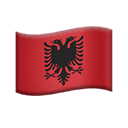
๐Ÿ‡ฆ๐Ÿ‡ฑ represents the flag of Albania, which displays a black double-headed eagle centered on a solid red field. Some designs appear flat and static while others add folds, shading, or wave-like motion to simulate a flag in the wind.

Albania is a Mediterranean country located on the Balkan Peninsula, and its flag is famously known as the double-headed eagle. The red field represents the courage and strength of the people, while the black eagle serves as a powerful national emblem rooted in the legacy of the hero Skanderbeg.

This emoji is commonly used to express cultural identity or to indicate a geographic connection to the region. It is often used in social media posts regarding international sports, tourism, or national celebrations.
Groups
Subgroups
Unicode
U+1F1E6 U+1F1F1
Variant status
Fully-qualified
Emoji version
E2.0

You may also want to check out

Related emojis that share similar meanings or usage.

๐Ÿ‡ง๐Ÿ‡ฌ
flag: Bulgaria

๐Ÿ‡ง๐Ÿ‡ฌ represents the flag of Bulgaria, which displays three equal horizontal bands of white, green, and red. Some designs appear flat and static while others add folds, shading, or wave-like motion to simulate a flag in the wind. Bulgaria is located in Southeast Europe on the Balkan Peninsula, and its flag uses horizontal bands to convey national values. The white represents peace, green represents the lush nature and agriculture, and red represents the blood shed for freedom. This emoji is often used to represent national identity in social media bios or to celebrate athletic achievements. It also appears frequently in travel-related posts to pinpoint geographical locations or cultural events within the country.

๐Ÿ‡จ๐Ÿ‡ฟ
flag: Czechia

๐Ÿ‡จ๐Ÿ‡ฟ represents the flag of Czechia, showing a blue triangle on the left with white and red horizontal bands on the right. Some designs appear flat while others add folds to simulate motion. Czechia is a landlocked country in Central Europe known for its rich architectural heritage. The white and red bands represent Bohemia, while the blue wedge was added for Moravia and to ensure visual distinction from other Slavic flags. This emoji is often used to signify national identity during sporting events or to highlight travel and cultural topics related to the region.

๐Ÿ‡ง๐Ÿ‡ช
flag: Belgium

๐Ÿ‡ง๐Ÿ‡ช represents the flag of Belgium, which contains three vertical stripes of black, yellow, and red. Some designs appear flat and static while others add folds, shading, or wave-like motion to simulate a flag in the wind. Belgium is a Western European country known for its central role in international politics and its rich culinary heritage. The vertical tricolor layout uses black, yellow, and red to represent the historical colors of the Duchy of Brabant, serving as a primary symbol of national identity and unity. This emoji is frequently used to denote geographical location, travel plans, or pride in Belgian cultural exports. It is often used in social media bios or sports-related posts to show support for the national team.

๐Ÿ‡ง๐Ÿ‡ฆ
flag: Bosnia & Herzegovina

๐Ÿ‡ง๐Ÿ‡ฆ represents the flag of Bosnia & Herzegovina, which consists of a blue field with a yellow right triangle and a diagonal row of white stars. Some designs appear flat and static while others add folds, shading, or wave-like motion to simulate a flag in the wind. This country is located in the Balkans and is recognized for its diverse cultural history. The yellow triangle represents the three constituent peoples and the country's map shape, while the white stars represent Europe and signify an infinite connection to the continent. It is often used to express national pride during sporting events or to mark geographic locations in travel-related messages. This emoji helps identify the country in digital lists and cultural discussions regarding Southeast Europe.

๐Ÿ‡ฝ๐Ÿ‡ฐ
flag: Kosovo

๐Ÿ‡ฝ๐Ÿ‡ฐ represents the flag of Kosovo, which displays a blue field with a golden map of the territory centered below an arc of six white stars. Some designs appear flat and static while others add folds, shading, or wave-like motion to simulate a flag in the wind. Located in the heart of the Balkans, Kosovo uses this flag to emphasize its multi-ethnic composition through the six stars positioned above the golden map. The blue and gold color scheme is intended to reflect a future of peace and integration within the broader European community. This emoji is commonly used to denote national identity in social media bios or to represent the region in geographic and travel-related conversations. It is often seen during international sporting events to signal support for local athletes.