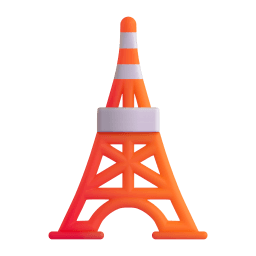
Tokyo tower

🗼

Tokyo tower

Represents Tokyo Tower or similar tall observation towers. Often used for Japan, cityscapes, travel, or a romantic urban mood. Its red-and-white design makes it a recognizable symbol of Tokyo.

  • You’re sharing a night photo of Tokyo Tower glowing against the skyline.

    The whole city feels softer when the tower lights up 🗼

Unicode
U+1F5FC
Variant status
Fully-qualified
Emoji version
E0.6
General

Can express city romance, sightseeing, or the excitement of travel.

Heads-up

Some users confuse it with the Eiffel Tower, using it more generally to mean “landmark” or “tall tower.”

Heads-up

Don’t mix it up with 🗽, which represents New York or the idea of freedom.

You may also want to check out

Related emojis that share similar meanings or usage.

🧱
brick

Represents a brick or brick wall, used for construction, renovation, or cityscape themes. Figuratively, it can symbolize something strong and solid, or occasionally a barrier or heavy burden.

🏔️
snow-capped mountain

Represents mountains topped with snow, often used to express adventure, nature, or scenic beauty. It can also symbolize personal challenges or achievements, like “climbing to the top.” Compared with 🗻 (Mount Fuji), which refers to a specific Japanese landmark, 🏔️ feels more universal and neutral, a generic mountain rather than a cultural icon.

🗻
mount fuji

Iconic peak and serene views, used for Japan trips, mountains, and lofty goals.

🗽
Statue of Liberty

Represents the Statue of Liberty in New York City. Commonly used for themes of freedom, America, travel, or iconic landmarks. Also symbolizes hope, independence, or starting a new chapter.

🗾
map of Japan

Represents Japan’s shape or territory, and by extension anything closely connected to the country, such as its culture, travel, or national identity. 🗾 is often noted as the only country-specific map emoji in the current Unicode set. A commonly cited explanation points to emoji’s origins in Japan: early Japanese mobile carrier sets included several Japan-centric icons and this map was already familiar. When Unicode later standardized emojis, it appears to have preserved this legacy item rather than creating map emojis for every country, although no single, definitive rationale has been published.