sleeping face

😴

sleeping face

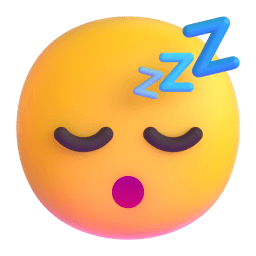
😴 represents a sleeping face, typically presented as a yellow face with closed eyes, a round open mouth, and three blue Zs floating above it.

This symbol conveys deep sleep or extreme boredom. It suggests the person is snoring or completely disconnected from their surroundings. It is a clear indicator of physical exhaustion or a lack of interest in the current conversation.

In daily life, it is often used to say goodnight or to show that a situation is making you drowsy. For instance, a student might send it during a slow class, or a tired worker might use it to signal they are finally going to bed after a long shift.

  • You’ve been up late finishing a project and your friend asks if you want to watch one more episode.

    I love you but… I’m literally falling asleep 😴
Subgroups
Unicode
U+1F634
Variant status
Fully-qualified
Emoji version
E1.0
General

Sometimes 😴 isn’t about literal sleep β€” it can also mean β€œthis is so boring I could fall asleep.” It’s a light, slightly dramatic way to show disinterest or exhaustion.

Cross-cultural

In Japanese chats, 😴 mostly appears as a cute way to say β€œI’m sleepy” or β€œoff to bed,” not sarcasm. People often pair it with β€œγŠγ‚„γ™γΏγ€œβ€ (good night).

Heads-up

Using 😴 in a group or work chat can read as you’re checked out or not paying attention β€” better save it for close friends or bedtime messages.

Compare picks

See what they share and how they differ to choose the right one.

Differences between 😴 (sleeping face) and πŸ₯± (yawning face)

Both show sleepiness. 😴 conveys deep tiredness and shutdown. It signals being done and ready to sleep, or feeling so bored that consciousness drifts away. πŸ₯± feels lighter and more social. It communicates a sleepy or bored reaction with a teasing edge, a theatrical gesture that can imply mild judgment or playful dismissal. The yawning face reads less final and more communicative than the sleeping face. It preserves the tired meaning while adding nuance, attitude, and an interpersonal hint.

Usage

If you’re utterly exhausted, checking out, or want to signal you’re going to sleep, use 😴. If you’re mildly tired, slightly bored, or want to tease someone about being uninteresting, use πŸ₯±.

You may also want to check out

Related emojis that share similar meanings or usage.

πŸ₯±
yawning face

πŸ₯± represents a yawning face, typically presented as a yellow face with closed, downward-curving eyes and a wide open mouth covered by a hand. This icon effectively signals physical exhaustion or extreme boredom. The hand placement suggests a polite attempt to cover a yawn, making it a clear indicator of a sleepy state or a lack of engagement in the current topic. In daily chats, it is often used to say 'I'm tired' without typing. It also serves as a subtle way to mock something dull. For instance, sending it during a long meeting implies the content is uninspiring, while using it late at night signals a need for sleep.

🀀
drooling face

🀀 represents a drooling face, typically presented as a yellow face with closed, happy eyes and a wide mouth showing a single drop of blue saliva at the corner. This icon signals intense longing or satisfaction. It is most often used to react to delicious food or someone attractive. The closed eyes suggest a state of bliss or a daydream-like trance caused by a strong sensory desire. In social settings, it is a playful way to say 'I want that' or 'That looks amazing.' You might send it after seeing a friend's vacation photos or when discussing a favorite hobby. It effectively communicates a sense of being overwhelmed by something highly appealing or enviable.

😌
relieved face

😌 represents a relieved face, typically presented as a yellow face with closed, downward-curved eyes and a soft, upward-curved smile that suggests a peaceful expression. This emoji signals emotional relief and a sense of being at ease. It is often used to show that a person is feeling calm and content after a period of worry or hard work, effectively communicating a relaxed state of mind without needing many words. In practical use, it works well for responding to a finished task, such as saying "Finally done with the project 😌." It also serves as a polite way to accept praise or to indicate that everything is under control during a busy day-to-day social interactions.

πŸ˜”
pensive face

πŸ˜” represents a pensive face, typically presented as a yellow face with downcast, closed eyes, drooping eyebrows, and a small, flat mouth. This expression signals internal reflection or a quiet sadness. Unlike more dramatic crying faces, it captures a subtle mood direction of disappointment or regret, making it suitable for moments of somber contemplation. In daily chats, it is often used when someone feels let down or is offering a humble apology. It works well for messages like "I'm sorry I missed it πŸ˜”" or "It didn't go as planned πŸ˜”," providing a soft, non-aggressive way to show vulnerability.

face with bags under eyes

🫩 represents a face with bags under eyes, typically presented as a weary yellow face with heavy, dark semicircles beneath drooping eyes and a neutral mouth. This symbol conveys physical exhaustion or chronic tiredness. It serves as a visual shorthand for being drained, capturing the look of someone who has missed significant sleep or is facing high levels of mental fatigue in their daily life. In digital conversations, it is often used to describe a rough morning or a long work week. For instance, sending it with a coffee emoji signals a desperate need for caffeine. It also works well when discussing burnout or simply feeling aged by stressful circumstances.