potable water

๐Ÿšฐ

potable water

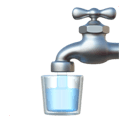
๐Ÿšฐ represents potable water, typically shown as a faucet dispensing water into a glass. Designs vary from a flat white symbol on a blue background to a more realistic metallic faucet.

Potable water represents a source of safe drinking water and is used to identify public fountains or taps suitable for human consumption. It serves as a vital navigational aid to help people find hydration and distinguish safe taps from non-potable water sources.

In practical communication, ๐Ÿšฐ is used to locate water sources or confirm water safety. For instance, someone might say, "Look for the ๐Ÿšฐ sign near the park entrance," "Is the tap water here ๐Ÿšฐ?" or "I filled my bottle at the ๐Ÿšฐ station."

Groups
Unicode
U+1F6B0
Variant status
Fully-qualified
Emoji version
E1.0

You may also want to check out

Related emojis that share similar meanings or usage.

๐Ÿšฑ
non-potable water

๐Ÿšฑ represents non-potable water, typically shown as a faucet and glass crossed out by a red prohibition symbol. Non-potable water signs are utilized to inform the public that a water source is unsuitable for drinking, brushing teeth, or food preparation. This visual warning is essential in areas where recycled, untreated, or chemically treated water is accessible, ensuring safety through universal iconography. In practical communication, ๐Ÿšฑ is used to identify hazardous water sources or to remind others of site safety rules. Common usage examples include: "Do not drink from the garden hose ๐Ÿšฑ," "The water at this campsite is ๐Ÿšฑ," or "Please note that all outdoor taps are marked ๐Ÿšฑ for your safety."

๐Ÿšป
restroom

๐Ÿšป represents restroom, typically shown as a blue square sign with white male and female silhouettes side by side. Designs vary in shading and depth, with some looking flatter and others more button-like. Restroom symbols are utilized globally to identify public toilets and washroom facilities. The icon uses a straight-torso figure to represent a man and a triangular-skirted figure to represent a woman, ensuring the message is understood across different cultures and languages. In practical use, this symbol frequently appears when people are navigating public spaces or sharing location details. For instance: "I am waiting near the ๐Ÿšป entrance," "Where is the nearest ๐Ÿšป in this mall?", or "The ๐Ÿšป is located right past the elevators."

๐Ÿšพ
water closet

๐Ÿšพ represents water closet, typically shown as a blue square or rounded rectangle with the white letters "WC". The bold sans-serif lettering makes the sign easy to read at a glance. Water closet is used internationally to identify public restrooms and flush toilet facilities. It serves as a concise linguistic shorthand that transcends many regional language barriers in travel and public infrastructure. In everyday communication, this symbol is frequently used to point out amenities or ask for directions. You might see it in messages such as: "Is there a ๐Ÿšพ nearby?", "The ๐Ÿšพ is located next to the elevator," or "Look for the ๐Ÿšพ sign at the end of the corridor."

๐Ÿšบ
womenโ€™s room

๐Ÿšบ represents womenโ€™s room, typically shown as a restroom sign with a womanโ€™s silhouette inside a rounded rectangle. Designs vary in background color, often using purple, pink, or blue. A womenโ€™s room sign is a functional graphic used to mark restroom facilities intended for women. It relies on a simplified human form to bypass language barriers, making it an essential part of international wayfinding systems in high-traffic areas like transit hubs or shopping centers. Usage scenarios often involve providing directions or identifying facility locations in text. Common examples include: "The ๐Ÿšบ is located right next to the elevator," "I am waiting near the ๐Ÿšบ entrance," or "Follow the signs for the ๐Ÿšบ on the second floor."

๐Ÿšน
menโ€™s room

๐Ÿšน represents menโ€™s room, typically shown as a blue rounded rectangle with a white standing male figure in the center. Designs vary in shading and detail. Menโ€™s room signage is primarily utilized to identify public restroom facilities designated for males. It relies on a minimalist human figure and high-contrast colors to ensure the message is understood across different languages and cultures. In practical use, ๐Ÿšน is frequently seen in navigational contexts or when discussing facility locations. Typical usage includes phrases like: "The ๐Ÿšน is located right next to the elevator," "I'll wait for you outside the ๐Ÿšน," or "Is there a ๐Ÿšน on this floor?"