mammoth

๐Ÿฆฃ

mammoth

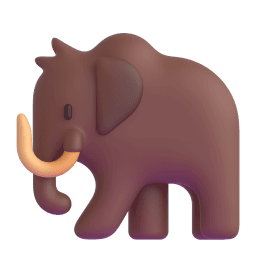
๐Ÿฆฃ: mammoth, typically shown as a large woolly mammoth with shaggy dark brown fur, a rounded body, and huge curved ivory tusks. It also has a long trunk and sturdy legs.

Mammoths were prehistoric megafauna that thrived during the Ice Age, adapted to freezing climates with their dense coats. In digital communication, the mammoth often represents things that are ancient, extinct, or physically massive. It can also be used to describe a project or object of enormous scale.

In chats and social posts, it fits lines like "Visiting the natural history museum to see the mammoth ๐Ÿฆฃ skeletons today!" when discussing ancient history. It can also describe a huge workload, such as "Finally finished that mammoth ๐Ÿฆฃ of a report." For winter vibes, it works well in captions like "Wrapped up in so many layers I feel like a woolly mammoth ๐Ÿฆฃ in this snow."

Subgroups
Unicode
U+1F9A3
Variant status
Fully-qualified
Emoji version
E13.0

You may also want to check out

Related emojis that share similar meanings or usage.

๐ŸซŽ
moose

๐ŸซŽ: moose, typically shown as a front-facing moose head with broad antlers, a long muzzle, and small ears. The face is usually dark brown with a lighter nose. Moose are the largest living members of the deer family and are iconic symbols of the northern wilderness. In everyday online use, the moose often suggests a rugged, outdoorsy lifestyle, a love for nature, or a specific connection to cold, forested regions like Canada or Scandinavia. In chats and social posts, it fits lines like "Finally made it to the cabin for the weekend ๐ŸซŽ" when sharing a nature getaway. It can also be used for wildlife sightings, as in "Spotted a massive moose ๐ŸซŽ on the trail this morning, absolutely breathtaking!" For travel-themed captions, it works well in lines like "Exploring the deep woods and mountain air ๐ŸซŽ".

๐Ÿ˜
elephant

๐Ÿ˜: elephant, typically shown as a gray elephant standing in side view with a large body, big fan-shaped ears, a long trunk, and tusks. It usually has thick legs and a thin tail. Elephants are the world's largest land animals, known for their high intelligence, deep family bonds, and incredible memory. In everyday online use, the elephant often represents a gentle giant persona, standing for strength, patience, and good luck across various cultures. In chats and social posts, it fits naturally in travel updates like "Finally saw a real elephant ๐Ÿ˜ on safari today!" when sharing wildlife experiences. It can also be used to describe someone dependable, such as "You never forget a detail, you have the memory of an elephant ๐Ÿ˜." For lighthearted notes, it works in messages like "Sending you some big elephant ๐Ÿ˜ luck for your exam tomorrow!"

๐Ÿฆ•
sauropod

๐Ÿฆ•: sauropod, typically shown as a long-necked dinosaur with a small head, a rounded body, thick pillar-like legs, and a tail stretching behind it. It is usually colored blue-green or green with spots along the back. Sauropods were the giants of the Mesozoic era, known for being massive herbivores like the Brachiosaurus or Apatosaurus. These gentle giants used their height to reach vegetation that other animals could not access, making them iconic symbols of prehistoric life. In daily communication, this emoji is perfect for museum trips or science-related topics. It is also used playfully to describe someone tall or to represent a slow, steady pace. You might see it in captions like 'Feeling like a ๐Ÿฆ• in a world of birds' or simply to show a love for dinosaurs.

๐Ÿ†
leopard

๐Ÿ†: leopard, typically shown as a golden-yellow leopard with black spots, a pale belly, and a long tail. It is usually shown standing or walking on all fours. Leopards are solitary predators celebrated for their agility and strength, particularly their ability to navigate both the ground and the trees. In everyday online use, the leopard often symbolizes a fierce independence, speed, or a bold sense of style, frequently appearing alongside fashion or luxury-themed content. In chats and social posts, it fits lines like "Finally going on that dream safari trip to see a leopard ๐Ÿ† in the wild!" when talking about nature travel. It can also be used for outfit inspiration, such as "Obsessed with this new leopard ๐Ÿ† print coat for the winter." For a more personal touch, it works in captions like "Moving through the week with leopard ๐Ÿ† speed and focus."

๐Ÿฆ
lion

๐Ÿฆ: lion, typically shown as a front-facing lion head with a thick brown or orange mane, a yellow face, and a dark nose. The muzzle is usually light-colored, with small whisker dots and sometimes a red mouth. Lions are iconic social cats known as the king of beasts, embodying strength, bravery, and leadership. In everyday online use, the lion often signifies courage, a bold personality, or a sense of pride and authority. It is also the go-to symbol for the Leo zodiac sign and sports teams that want to project a fierce, dominant image. In chats and social posts, it fits lines like "Be brave and find your inner lion ๐Ÿฆ today" when encouraging someone to be confident. It can also be used for birthdays, such as "Happy birthday to my favorite Leo ๐Ÿฆ!" For a more competitive vibe, it works in messages like "Our team played with the heart of a lion ๐Ÿฆ on the field."