flag: Togo

πŸ‡ΉπŸ‡¬

flag: Togo

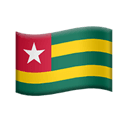
πŸ‡ΉπŸ‡¬ represents the flag of Togo, which contains five alternating green and yellow horizontal stripes and a red canton in the upper left with a white five-pointed star. Some designs appear flat and static while others add folds, shading, or wave-like motion to simulate a flag in the wind.

Togo is a West African nation known for its diverse lagoons and palm-lined beaches. The green stripes represent the country's agriculture and hope, while the yellow stripes signify underground resources, and the white star stands for life, purity, and independence.

This emoji is often used to denote national identity in social media bios or to support Togolese athletes during global competitions. It is also frequently seen in travel-related posts and discussions regarding West African geography and culture.
Groups
Subgroups
Unicode
U+1F1F9 U+1F1EC
Variant status
Fully-qualified
Emoji version
E2.0

You may also want to check out

Related emojis that share similar meanings or usage.

πŸ‡ΈπŸ‡³
flag: Senegal

πŸ‡ΈπŸ‡³ represents the flag of Senegal, featuring three vertical bands of green, yellow, and red with a green five-pointed star in the center. Some designs appear flat and static while others add folds, shading, or wave-like motion to simulate a flag in the wind. Senegal is a coastal West African nation known for its vibrant music scene and hospitality. The green band represents the country's lush vegetation, the yellow signifies the sun and wealth, and the red represents the struggle for freedom, while the central star acts as a symbol of spiritual and social progress. This emoji is commonly used to express national identity during major sporting events or cultural festivals. It is also frequently applied in travel-related messaging to denote a destination within the region.

πŸ‡¬πŸ‡²
flag: Gambia

πŸ‡¬πŸ‡² represents the flag of Gambia, which features horizontal stripes of red, white, blue, white, and green. Some designs appear flat and static while others add folds, shading, or wave-like motion to simulate a flag in the wind. Gambia is the smallest country on mainland Africa and is almost entirely surrounded by Senegal. The blue stripe represents the Gambia River, while the white borders signify peace and purity, and the red and green reflect the sun and the land. This color scheme avoids political party symbols, focusing instead on geographic unity. This emoji is often used to denote national identity in social media bios or to highlight West African travel destinations. It is a common sight in digital spaces during regional football tournaments and cultural festivals.

πŸ‡ΉπŸ‡³
flag: Tunisia

πŸ‡ΉπŸ‡³ represents the flag of Tunisia, which contains a red field with a white circle in the center enclosing a red crescent and a five-pointed star. Some designs appear flat and static while others add folds, shading, or wave-like motion to simulate a flag in the wind. Tunisia is the northernmost country in Africa, situated along the Mediterranean coast. The red crescent and star are central symbols of the nation's heritage, while the red background is often associated with the resistance against Ottoman and French influence to achieve national sovereignty. This emoji is often used to signify Tunisian identity in social media bios or to celebrate cultural achievements. It is also frequently seen in sports contexts or when discussing North African tourism and geography.

πŸ‡³πŸ‡¬
flag: Nigeria

πŸ‡³πŸ‡¬ represents the flag of Nigeria, which consists of three vertical bands of green, white, and green. Some designs appear flat and static while others add folds, shading, or wave-like motion to simulate a flag in the wind. Nigeria is a West African nation often referred to as the Giant of Africa due to its large population and economy. The green bands symbolize the country's vast natural wealth and agricultural land, while the white stripe in the center stands for peace. This emoji is commonly used to denote national identity in social media bios or to celebrate Nigerian cultural achievements. It often appears in discussions regarding international football, music, and travel within the West African region.

πŸ‡ΏπŸ‡²
flag: Zambia

πŸ‡ΏπŸ‡² represents the flag of Zambia, which displays a green field with a block of red, black, and orange vertical stripes in the lower right corner topped by an orange eagle. Some designs appear flat and static while others add folds, shading, or wave-like motion to simulate a flag in the wind. Zambia is a landlocked country in Southern Africa known for its diverse wildlife and the massive Victoria Falls. The green field signifies the nation's agriculture, while the soaring eagle represents the national spirit and the ability to overcome challenges. The specific color arrangement reflects the country's history and its rich copper mining industry. This emoji is commonly used to denote national identity in social media bios or to signal geographic locations. It is also frequently seen during international sporting events to show support for Zambian athletes.