flag: Suriname

πŸ‡ΈπŸ‡·

flag: Suriname

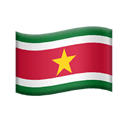
πŸ‡ΈπŸ‡· represents the flag of Suriname, which consists of five horizontal bands of green, white, red, white, and green with a yellow five-pointed star in the center. Some designs appear flat and static while others add folds, shading, or wave-like motion to simulate a flag in the wind.

Suriname is a South American nation celebrated for its immense biodiversity and cultural fusion. The yellow star serves as a central symbol of unity, while the red stripe reflects the hope and determination of the people through a history of change.

This emoji is often used to denote national identity in social media bios or to tag content related to Surinamese culture and geography. It frequently appears in discussions regarding regional travel or international athletic competitions.
Groups
Subgroups
Unicode
U+1F1F8 U+1F1F7
Variant status
Fully-qualified
Emoji version
E2.0

You may also want to check out

Related emojis that share similar meanings or usage.

πŸ‡³πŸ‡±
flag: Netherlands

πŸ‡³πŸ‡± represents the flag: Netherlands, which consists of three horizontal bands of red, white, and blue. Some designs appear flat and static while others add folds, shading, or wave-like motion to simulate a flag in the wind. The Netherlands is a coastal European nation famous for its windmills, tulips, and extensive canal systems. The horizontal tricolor design uses red to symbolize the people, white for peace, and blue for the sea and the sky, reflecting the country's long history of land reclamation and trade. This emoji is often used to signify national identity during major sporting events or to indicate a Dutch location in travel social media posts. It is also a common shorthand for the Dutch language in digital menus and profile descriptions.

πŸ‡»πŸ‡ͺ
flag: Venezuela

πŸ‡»πŸ‡ͺ represents the flag of Venezuela, which contains three horizontal bands of yellow, blue, and red with eight white stars arranged in a downward arc in the center. Some designs appear flat and static while others add folds, shading, or wave-like motion to simulate a flag in the wind. Venezuela is a South American country with a rich cultural heritage and significant biodiversity. The yellow band signifies the land's riches, the blue represents the sea, and the red stands for courage, while the eight stars honor the original provinces that sought independence. This emoji is often used to express national pride or to mark geographic locations in digital communication. It is a frequent sight in discussions regarding Venezuelan culture, international sports, and regional travel.

πŸ‡΅πŸ‡Ύ
flag: Paraguay

πŸ‡΅πŸ‡Ύ represents the flag of Paraguay, which displays three horizontal bands of red, white, and blue with a circular emblem in the center. Some designs appear flat and static while others add folds, shading, or wave-like motion to simulate a flag in the wind. Paraguay is a landlocked South American nation where this tricolor design serves as a primary symbol of sovereignty. The central emblem on the front side is the National Coat of Arms, which features a yellow star and green palm and olive branches representing independence and peace. This emoji is commonly used to denote national identity in sports contexts or to highlight cultural topics. It is often used in digital conversations to signify travel to the region or to celebrate local holidays and traditions.

πŸ‡¬πŸ‡Ύ
flag: Guyana

πŸ‡¬πŸ‡Ύ represents the flag of Guyana, which displays a green field with a gold triangle bordered in white and a red triangle bordered in black. Some designs appear flat and static while others add folds, shading, or wave-like motion to simulate a flag in the wind. Guyana is a South American nation with deep Caribbean cultural ties and immense tropical rainforests. The green background stands for agriculture and foliage, while the red triangle signifies the zeal and dynamic nature of nation-building. This combination of geometric shapes creates a distinct arrowhead motif that is unique among world flags. This emoji is often used to denote national identity in social media bios or to support Guyanese teams in international sports. It is also common in discussions regarding South American geography, tourism, and regional cultural heritage.

πŸ‡°πŸ‡³
flag: St. Kitts & Nevis

πŸ‡°πŸ‡³ represents the flag of St. Kitts & Nevis, which features a green upper-left triangle and a red lower-right triangle separated by a diagonal black band with yellow borders and two white stars. Some designs appear flat and static while others add folds, shading, or wave-like motion to simulate a flag in the wind. This Caribbean nation is the smallest sovereign state in the Western Hemisphere. The green field stands for the islands' fertile land, while the white stars symbolize liberty and the two constituent islands of the federation. The black stripe acknowledges the African heritage of the population, framed by yellow to denote the tropical sunshine. It is often used to signify national identity in sports, international diplomacy, or when discussing regional Caribbean travel. This emoji helps users quickly identify content related to the Federation of Saint Christopher and Nevis.