flag: Portugal

๐Ÿ‡ต๐Ÿ‡น

flag: Portugal

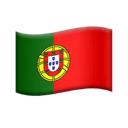
๐Ÿ‡ต๐Ÿ‡น represents the flag of Portugal, which includes a vertical green band on the left and a larger red band on the right with a yellow armillary sphere and shield at the boundary. Some designs appear flat and static while others add folds, shading, or wave-like motion to simulate a flag in the wind.

Portugal is a coastal nation in Southwestern Europe known for its influential maritime history. The green section stands for hope, the red for the nation's struggle, and the armillary sphere serves as a tribute to the Age of Discovery and Portuguese navigational expertise.

This emoji is a primary identity marker used for cultural festivals, sporting events, and travel updates. It is often used to denote the Portuguese language or to celebrate national holidays and local traditions.
Groups
Subgroups
Unicode
U+1F1F5 U+1F1F9
Variant status
Fully-qualified
Emoji version
E2.0

You may also want to check out

Related emojis that share similar meanings or usage.

๐Ÿ‡ต๐Ÿ‡ฑ
flag: Poland

๐Ÿ‡ต๐Ÿ‡ฑ represents the flag of Poland, which contains two horizontal bands of white on the top and red on the bottom. Some designs appear flat and static while others add folds, shading, or wave-like motion to simulate a flag in the wind. Poland is a Central European country with a deep history, and these national colors have been officially recognized since the early 19th century. The white band symbolizes the white eagle of the coat of arms, while the red represents the traditional shield color, together forming a powerful identity symbol for the nation. This emoji is commonly used to denote Polish heritage, cultural events, or geographical locations. It is often used in sports contexts to cheer for national teams or to mark travel itineraries involving the Baltic region.

๐Ÿ‡ณ๐Ÿ‡ฑ
flag: Netherlands

๐Ÿ‡ณ๐Ÿ‡ฑ represents the flag: Netherlands, which consists of three horizontal bands of red, white, and blue. Some designs appear flat and static while others add folds, shading, or wave-like motion to simulate a flag in the wind. The Netherlands is a coastal European nation famous for its windmills, tulips, and extensive canal systems. The horizontal tricolor design uses red to symbolize the people, white for peace, and blue for the sea and the sky, reflecting the country's long history of land reclamation and trade. This emoji is often used to signify national identity during major sporting events or to indicate a Dutch location in travel social media posts. It is also a common shorthand for the Dutch language in digital menus and profile descriptions.

๐Ÿ‡ซ๐Ÿ‡ท
flag: France

๐Ÿ‡ซ๐Ÿ‡ท represents the flag of France, which consists of three equal vertical bands of blue, white, and red. Some designs appear flat and static while others add folds, shading, or wave-like motion to simulate a flag in the wind. France is a major European nation known for its deep history and influence. The vertical triband design uses blue and red to represent Paris, while white signifies the monarchy. This combination has become a global symbol of national identity and republican values. It is often used to discuss travel, French cuisine, or international sports. This emoji also serves as a shorthand for the French language in multilingual settings.

๐Ÿ‡ฒ๐Ÿ‡ฆ
flag: Morocco

๐Ÿ‡ฒ๐Ÿ‡ฆ represents the flag of Morocco, which is a solid red field with a green interlaced pentagram centered in the middle. Some designs appear flat and static while others add folds, shading, or wave-like motion to simulate a flag in the wind. Morocco is a North African kingdom with a rich history of trade and art. The red background honors the ruling dynasty, while the green Seal of Solomon represents the five pillars of Islam. These national colors have been used for centuries to signify the country's unique identity. This emoji is commonly used to discuss North African geography, travel, and cultural pride. It is also frequently seen during global sports competitions to cheer for the national team.

๐Ÿ‡ป๐Ÿ‡ช
flag: Venezuela

๐Ÿ‡ป๐Ÿ‡ช represents the flag of Venezuela, which contains three horizontal bands of yellow, blue, and red with eight white stars arranged in a downward arc in the center. Some designs appear flat and static while others add folds, shading, or wave-like motion to simulate a flag in the wind. Venezuela is a South American country with a rich cultural heritage and significant biodiversity. The yellow band signifies the land's riches, the blue represents the sea, and the red stands for courage, while the eight stars honor the original provinces that sought independence. This emoji is often used to express national pride or to mark geographic locations in digital communication. It is a frequent sight in discussions regarding Venezuelan culture, international sports, and regional travel.