flag: Pitcairn Islands

๐Ÿ‡ต๐Ÿ‡ณ

flag: Pitcairn Islands

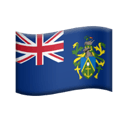
๐Ÿ‡ต๐Ÿ‡ณ represents the flag of Pitcairn Islands, which uses a blue field with a Union Jack in the upper left and a green and yellow crest on the right. Some designs appear flat and static while others add folds, shading, or wave-like motion to simulate a flag in the wind.

Pitcairn is a remote volcanic island in the South Pacific known for its small population and unique history. The yellow anchor and Bible on the shield represent the HMS Bounty, while the green and yellow crest elements signify the local flora and the island's natural landscape.

This emoji is often used in maritime, travel, and geographical contexts. It effectively identifies the territory during cultural discussions or when highlighting the specific identity of this isolated community.
Groups
Subgroups
Unicode
U+1F1F5 U+1F1F3
Variant status
Fully-qualified
Emoji version
E2.0

You may also want to check out

Related emojis that share similar meanings or usage.

๐Ÿ‡ป๐Ÿ‡ฌ
flag: British Virgin Islands

๐Ÿ‡ป๐Ÿ‡ฌ represents the flag of the British Virgin Islands, which displays a dark blue field with the Union Jack in the corner and a green shield on the right. Some designs appear flat and static while others add folds, shading, or wave-like motion to simulate a flag in the wind. The British Virgin Islands are a prominent Caribbean territory famous for their white-sand beaches and major yachting hubs. The green shield contains the image of Saint Ursula and her lamps, a core cultural symbol that distinguishes this flag from other blue ensigns used in the region. This emoji is often used to denote local pride, discuss Caribbean travel logistics, or identify participants in regional sports. It serves as a clear geographical marker for the islands in digital maps and travel itineraries.

๐Ÿ‡ฑ๐Ÿ‡จ
flag: St. Lucia

๐Ÿ‡ฑ๐Ÿ‡จ represents the flag of St. Lucia, which features a cerulean blue field with a central emblem of three overlapping triangles in white, black, and yellow. Some designs appear flat and static while others add folds, shading, or wave-like motion to simulate a flag in the wind. St. Lucia is a sovereign island nation in the West Indies known for its dramatic landscape. The central triangular emblem symbolizes the Pitons, which are two famous volcanic peaks that serve as a primary national symbol for the country and its people. This emoji is frequently used to indicate national identity in social media bios or to tag posts related to Caribbean travel. It is often used in the context of sailing, tropical vacations, and regional sporting competitions.

๐Ÿ‡ต๐Ÿ‡ผ
flag: Palau

๐Ÿ‡ต๐Ÿ‡ผ represents the flag of Palau, which features a light blue field and a solid yellow circle positioned slightly off-center toward the left. Some designs appear flat and static while others add folds, shading, or wave-like motion to simulate a flag in the wind. Palau is an island nation in the western Pacific known for its stunning marine biodiversity. The blue background represents the surrounding ocean, while the yellow disk symbolizes the full moon, a traditional sign of peace and a time for human activity. This layout is visually distinct from the Japanese flag due to the off-center placement and specific color choices. This emoji is often used to denote national identity or to highlight travel destinations within the Micronesia region. It frequently appears in discussions regarding environmental protection and international sports competitions.

๐Ÿ‡ฌ๐Ÿ‡ฌ
flag: Guernsey

๐Ÿ‡ฌ๐Ÿ‡ฌ represents the flag of Guernsey, which displays a red cross on a white field with a smaller gold cross centered inside it. Some designs appear flat and static while others add folds, shading, or wave-like motion to simulate a flag in the wind. Guernsey is a British Crown Dependency situated in the English Channel. The red cross mirrors the Cross of St George, while the inner gold cross specifically honors William the Conqueror, reflecting the island's deep historical roots as part of the Duchy of Normandy. This emoji is commonly used to denote local national identity and geographic location. It is often used in discussions regarding the island's unique culture, tourism, or participation in international sports.

๐Ÿ‡ฒ๐Ÿ‡ญ
flag: Marshall Islands

๐Ÿ‡ฒ๐Ÿ‡ญ represents the flag of the Marshall Islands, which uses a blue field with two diagonal stripes of orange and white rising from the bottom corner, and a 24-pointed white star in the upper left. Some designs appear flat while others add folds, shading, or wave-like motion to simulate a flag in the wind. This central Pacific nation is known for its coral atolls and seafaring heritage. The blue background represents the ocean, while the diagonal bands symbolize the equator and a path toward the future. The white star's large points denote the four main centers of the archipelago, serving as a vital cultural symbol of unity. It is often used to denote national identity in sports or to tag social media posts about Pacific travel and geography. This emoji effectively identifies the country in a concise visual format.