flag: North Macedonia

๐Ÿ‡ฒ๐Ÿ‡ฐ

flag: North Macedonia

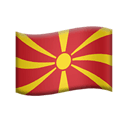
๐Ÿ‡ฒ๐Ÿ‡ฐ represents the flag of North Macedonia, which displays a yellow sun with eight broadening rays extending across a red field. Some designs appear flat and static while others add folds, shading, or wave-like motion to simulate a flag in the wind.

This Balkan nation is located in Southeast Europe, and its flag depicts the 'New Sun of Liberty' through its central golden disk and radiating beams. The sun motif is a deeply rooted cultural symbol that reflects the country's history and its aspirations for a bright future.

This emoji is commonly used to denote national identity in social media profiles or to highlight the country during global athletic competitions. It is often used in travel contexts to represent the scenic geography and rich history of the region.
Groups
Subgroups
Unicode
U+1F1F2 U+1F1F0
Variant status
Fully-qualified
Emoji version
E2.0

You may also want to check out

Related emojis that share similar meanings or usage.

๐Ÿ‡ฝ๐Ÿ‡ฐ
flag: Kosovo

๐Ÿ‡ฝ๐Ÿ‡ฐ represents the flag of Kosovo, which displays a blue field with a golden map of the territory centered below an arc of six white stars. Some designs appear flat and static while others add folds, shading, or wave-like motion to simulate a flag in the wind. Located in the heart of the Balkans, Kosovo uses this flag to emphasize its multi-ethnic composition through the six stars positioned above the golden map. The blue and gold color scheme is intended to reflect a future of peace and integration within the broader European community. This emoji is commonly used to denote national identity in social media bios or to represent the region in geographic and travel-related conversations. It is often seen during international sporting events to signal support for local athletes.

๐Ÿ‡ฒ๐Ÿ‡ช
flag: Montenegro

๐Ÿ‡ฒ๐Ÿ‡ช represents the flag of Montenegro, which displays a red field with a gold border and a centered golden double-headed eagle. Some designs appear flat and static while others add folds, shading, or wave-like motion to simulate a flag in the wind. Montenegro is a Balkan nation known for its rugged mountains and medieval villages along the Adriatic coastline. The double-headed eagle at the center of the flag is a historic heraldic symbol, while the gold border distinguishes it from other regional red flags, emphasizing national sovereignty. This emoji is commonly used to denote geographical location or cultural heritage. It is often used in sports contexts or travel discussions to represent the country's unique identity.

๐Ÿ‡ท๐Ÿ‡ธ
flag: Serbia

๐Ÿ‡ท๐Ÿ‡ธ represents the flag of Serbia, which is a horizontal tricolor of red, blue, and white with a coat of arms placed toward the left side. Some designs appear flat and static while others add folds, shading, or wave-like motion to simulate a flag in the wind. Serbia is a landlocked country located at the crossroads of Central and Southeast Europe. The red-blue-white tricolor is adorned with the national coat of arms, which depicts a double-headed eagle and a crown, symbolizing the country's long monarchical and spiritual history. This emoji is often used to denote Serbian identity in social media bios or to support national teams in global competitions. It is also a common marker for travel content and cultural discussions related to the Balkans.

๐Ÿ‡ฌ๐Ÿ‡ท
flag: Greece

๐Ÿ‡ฌ๐Ÿ‡ท represents the flag of Greece, which contains nine alternating blue and white horizontal stripes and a blue canton with a white cross. Some designs appear flat and static while others add folds, shading, or wave-like motion to simulate a flag in the wind. Greece is located at the crossroads of Europe, Asia, and Africa, and is often called the cradle of Western civilization. The blue and white stripes represent the sea and sky, while the cross in the upper corner serves as a traditional religious symbol of the Greek Orthodox faith. This emoji is frequently used to denote national identity, Mediterranean travel, and maritime culture. It is often used during international sporting competitions or when discussing ancient history and Greek heritage.

๐Ÿ‡ธ๐Ÿ‡ฎ
flag: Slovenia

๐Ÿ‡ธ๐Ÿ‡ฎ represents the flag of Slovenia, which consists of three horizontal bands in white, blue, and red with a coat of arms in the upper left. Some designs appear flat and static while others add folds, shading, or wave-like motion to simulate a flag in the wind. Slovenia is a Central European nation situated at the crossroads of the Alps and the Mediterranean. The coat of arms on the flag depicts Mount Triglav, the country's highest mountain, while the blue wavy lines signify the Adriatic Sea and local rivers. This emoji is a standard tool for indicating national identity in digital spaces. It is often used to represent the Slovenian language, celebrate achievements in international sports, or document travel itineraries through the region.