๐Ÿ‡ณ๐Ÿ‡ฆ

flag: Namibia

Last updated: 04/26/2026

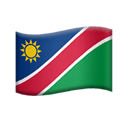
๐Ÿ‡ณ๐Ÿ‡ฆ represents the flag of Namibia, which includes a blue top-left triangle with a yellow sun and a green bottom-right triangle, separated by a red diagonal stripe with white borders. Some designs appear flat and static while others add folds, shading, or wave-like motion to simulate a flag in the wind.

Namibia is a country in Southwestern Africa famous for its diverse wildlife and the ancient Namib Desert. The yellow sun on the flag symbolizes life and energy, while the red band represents the people's resilience and their shared journey toward a peaceful future.

This emoji is commonly used to express national identity or to mark content related to African geography and tourism. It is often seen in social media bios or travel posts to highlight a connection to the region's unique landscapes and culture.
Groups
Subgroups
Unicode
U+1F1F3 U+1F1E6
Variant status
Fully-qualified
Emoji version

Platform rendering differences

flag: Namibia appearance on Apple

Apple

flag: Namibia appearance on Twemoji

Twemoji

Apple Emoji icons and related visual assets shown here are the property and registered trademarks of Apple Inc. They are included only for commentary, comparison, and informational purposes, not for commercial use.

You may also want to check out

Related emojis that share similar meanings or usage.

๐Ÿ‡น๐Ÿ‡ฟ
flag: Tanzania

๐Ÿ‡น๐Ÿ‡ฟ represents the flag of Tanzania, which uses a diagonal black band with yellow borders to separate a green triangle on top from a blue triangle below. Some designs appear flat and static while others add folds, shading, or wave-like motion to simulate a flag in the wind. Tanzania is home to Africa's highest peak, Mount Kilimanjaro, and the vast Serengeti plains. The flag's green field stands for the country's lush vegetation, while the black diagonal represents the local population, framed by thin yellow lines denoting mineral prosperity. It is often used to denote national identity in social media bios or to signal travel destinations within East Africa. This emoji frequently appears in discussions regarding wildlife conservation, tourism, and regional diplomatic affairs.

๐Ÿ‡ฒ๐Ÿ‡ฑ
flag: Mali

๐Ÿ‡ฒ๐Ÿ‡ฑ represents the flag of Mali, which is a vertical tricolor of green, yellow, and red. Some designs appear flat and static while others add folds, shading, or wave-like motion to simulate a flag in the wind. Mali is a large West African nation where the green stripe stands for the fertility of the land, yellow represents mineral wealth, and red honors the struggle for sovereignty. These Pan-African colors are shared by several neighboring countries, reflecting a collective historical bond and regional identity. This emoji is commonly used to denote Malian heritage or to mark locations within the country during travel. It also appears frequently in sports discussions and cultural exchanges involving West African traditions.

๐Ÿ‡ณ๐Ÿ‡ช
flag: Niger

๐Ÿ‡ณ๐Ÿ‡ช represents the flag of Niger, which displays three horizontal stripes of orange, white, and green with a solid orange circle in the center. Some designs appear flat and static while others add folds, shading, or wave-like motion to simulate a flag in the wind. Niger is a landlocked country in West Africa where the orange band represents the Sahara Desert and the white stripe stands for purity. The central orange circle serves as a symbol of the sun, highlighting the intense heat and the nation's geographical position. This emoji is often used to represent national identity in sports, travel, and cultural contexts. It is frequently seen in social media profiles and news updates regarding regional events in West Africa.

๐Ÿ‡น๐Ÿ‡ฉ
flag: Chad

๐Ÿ‡น๐Ÿ‡ฉ represents the flag of Chad, which consists of three vertical bands in blue, yellow, and red. Some designs appear flat and static while others add folds, shading, or wave-like motion to simulate a flag in the wind. Chad is a vast landlocked country in North-Central Africa where the blue stripe signifies the sky and hope, the yellow stripe represents the sun and the northern desert, and the red stripe symbolizes the blood shed for independence. This tricolor layout mirrors the French flag's structure while utilizing Pan-African colors to reflect local identity and history. This emoji is often used in digital contexts to denote Chadian citizenship, cultural heritage, or participation in international events. It serves as a clear geographical marker for topics related to the Sahel region or Chadian diplomacy.

๐Ÿ‡ฌ๐Ÿ‡ฒ
flag: Gambia

๐Ÿ‡ฌ๐Ÿ‡ฒ represents the flag of Gambia, which features horizontal stripes of red, white, blue, white, and green. Some designs appear flat and static while others add folds, shading, or wave-like motion to simulate a flag in the wind. Gambia is the smallest country on mainland Africa and is almost entirely surrounded by Senegal. The blue stripe represents the Gambia River, while the white borders signify peace and purity, and the red and green reflect the sun and the land. This color scheme avoids political party symbols, focusing instead on geographic unity. This emoji is often used to denote national identity in social media bios or to highlight West African travel destinations. It is a common sight in digital spaces during regional football tournaments and cultural festivals.