flag: Luxembourg

๐Ÿ‡ฑ๐Ÿ‡บ

flag: Luxembourg

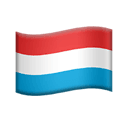
๐Ÿ‡ฑ๐Ÿ‡บ represents the flag of Luxembourg, which is a horizontal tricolor of red, white, and light blue bands. Some designs appear flat and static while others add folds, shading, or wave-like motion to simulate a flag in the wind. The shade of blue varies between a bright sky blue and a slightly deeper tone across different graphic styles.

Luxembourg is a small European nation known for its high standard of living and role as a major financial hub. The tricolor layout utilizes a specific light blue shade to maintain its unique national identity and avoid confusion with similar European flags.

This emoji is often used in social media bios to denote heritage or in travel contexts. It is also frequently seen in discussions regarding European diplomacy or international business.
Groups
Subgroups
Unicode
U+1F1F1 U+1F1FA
Variant status
Fully-qualified
Emoji version
E2.0

You may also want to check out

Related emojis that share similar meanings or usage.

๐Ÿ‡ช๐Ÿ‡บ
flag: European Union

๐Ÿ‡ช๐Ÿ‡บ represents the flag of the European Union, shown as a dark blue field with twelve yellow five-pointed stars arranged in a circle. Some designs appear flat, while others include folds or shading to suggest a waving flag. Although this emoji is categorized under โ€œcountry flags,โ€ the European Union is not a country. It is a supranational organization made up of multiple member states. The flag is the official emblem of the European Union . The blue background symbolizes stability and unity, while the circle of twelve stars represents harmony and solidarity among the peoples of Europe. The number twelve is symbolic and does not correspond to the number of member states. This emoji is frequently used in discussions about European politics, the euro, or travel across Europe. It also appears in social media bios to indicate a European identity, or in sports contexts to represent the region as a whole.

๐Ÿ‡ณ๐Ÿ‡ฑ
flag: Netherlands

๐Ÿ‡ณ๐Ÿ‡ฑ represents the flag: Netherlands, which consists of three horizontal bands of red, white, and blue. Some designs appear flat and static while others add folds, shading, or wave-like motion to simulate a flag in the wind. The Netherlands is a coastal European nation famous for its windmills, tulips, and extensive canal systems. The horizontal tricolor design uses red to symbolize the people, white for peace, and blue for the sea and the sky, reflecting the country's long history of land reclamation and trade. This emoji is often used to signify national identity during major sporting events or to indicate a Dutch location in travel social media posts. It is also a common shorthand for the Dutch language in digital menus and profile descriptions.

๐Ÿ‡ฑ๐Ÿ‡ฎ
flag: Liechtenstein

๐Ÿ‡ฑ๐Ÿ‡ฎ represents the flag of Liechtenstein, which consists of two horizontal bands of blue and red with a gold crown in the upper left. Some designs appear flat and static while others add folds, shading, or wave-like motion to simulate a flag in the wind. This small alpine nation is one of the world's few remaining principalities, nestled between Switzerland and Austria. The blue band symbolizes the sky above the mountain landscape, while the red symbolizes the fires lit at night; the golden crown was added to the design to ensure the flag remained distinct on the global stage. This emoji is commonly used to denote national identity in sports or to indicate a geographical location during travel. It is often used in social media bios or messages concerning European history and culture.

๐Ÿ‡ธ๐Ÿ‡ฎ
flag: Slovenia

๐Ÿ‡ธ๐Ÿ‡ฎ represents the flag of Slovenia, which consists of three horizontal bands in white, blue, and red with a coat of arms in the upper left. Some designs appear flat and static while others add folds, shading, or wave-like motion to simulate a flag in the wind. Slovenia is a Central European nation situated at the crossroads of the Alps and the Mediterranean. The coat of arms on the flag depicts Mount Triglav, the country's highest mountain, while the blue wavy lines signify the Adriatic Sea and local rivers. This emoji is a standard tool for indicating national identity in digital spaces. It is often used to represent the Slovenian language, celebrate achievements in international sports, or document travel itineraries through the region.

๐Ÿ‡ซ๐Ÿ‡ท
flag: France

๐Ÿ‡ซ๐Ÿ‡ท represents the flag of France, which consists of three equal vertical bands of blue, white, and red. Some designs appear flat and static while others add folds, shading, or wave-like motion to simulate a flag in the wind. France is a major European nation known for its deep history and influence. The vertical triband design uses blue and red to represent Paris, while white signifies the monarchy. This combination has become a global symbol of national identity and republican values. It is often used to discuss travel, French cuisine, or international sports. This emoji also serves as a shorthand for the French language in multilingual settings.