flag: Iran

๐Ÿ‡ฎ๐Ÿ‡ท

flag: Iran

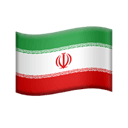
๐Ÿ‡ฎ๐Ÿ‡ท represents the flag of Iran, which uses horizontal green, white, and red stripes with a red central emblem and stylized script on the inner edges. Some designs appear flat and static while others add folds, shading, or wave-like motion to simulate a flag in the wind.

Iran is a country in Western Asia known for its ancient history and diverse geography. The central red emblem is a stylized composite of Islamic symbols, while the repeating script along the color borders signifies a specific historical date. These visual elements are central to the nation's identity, representing a blend of faith and sovereignty.

This emoji is often used to denote national identity in sports, international diplomacy, or cultural exchange. It is the standard way to represent the country in digital maps, travel logs, and global news discussions.
Groups
Subgroups
Unicode
U+1F1EE U+1F1F7
Variant status
Fully-qualified
Emoji version
E2.0

You may also want to check out

Related emojis that share similar meanings or usage.

๐Ÿ‡ฎ๐Ÿ‡ถ
flag: Iraq

๐Ÿ‡ฎ๐Ÿ‡ถ represents the flag of Iraq, which has three equal horizontal bands of red, white, and black with green calligraphy centered in the white stripe. Some designs appear flat and static while others add folds, shading, or wave-like motion to simulate a flag in the wind. Iraq is located in the Middle East and is home to ancient Mesopotamian history. The green script in the center represents the Takbir, while the Pan-Arab colors reflect the shared history and unity of the Arab world. This emoji is commonly used to express national pride or to mark geographical locations in social media posts. It is often used during international sporting events or to highlight cultural and historical topics related to the region.

๐Ÿ‡ถ๐Ÿ‡ฆ
flag: Qatar

๐Ÿ‡ถ๐Ÿ‡ฆ represents the flag of Qatar, consisting of a white vertical band on the left and a maroon band on the right separated by a nine-point serrated line. Some designs appear flat and static while others add folds, shading, or wave-like motion to simulate a flag in the wind. Qatar is a sovereign state located on the northeastern coast of the Arabian Peninsula. The serrated edge specifically marks the country's historical role in regional treaties, while the maroon color reflects the traditional dyes used in the area for centuries. This emoji is frequently used to denote national identity in social media profiles or to signal participation in major global events hosted in the region. It is often used in travel, energy industry discussions, and international football contexts.

๐Ÿ‡ช๐Ÿ‡ฌ
flag: Egypt

๐Ÿ‡ช๐Ÿ‡ฌ represents the flag of Egypt, which displays three horizontal bands of red, white, and black with a golden eagle centered in the middle. Some designs appear flat and static while others add folds, shading, or wave-like motion to simulate a flag in the wind. Egypt is a transcontinental country famous for its ancient monuments and the Nile River. The red band signifies the period before the revolution, white represents a bright future, and black symbolizes past oppression. The Eagle of Saladin stands as a powerful national emblem of strength and unity. This emoji is often used to denote Egyptian identity in social media bios or to tag content related to history and tourism. It also appears frequently during major sporting events to support national athletes.

๐Ÿ‡ฎ๐Ÿ‡ฑ
flag: Israel

๐Ÿ‡ฎ๐Ÿ‡ฑ represents the flag of Israel, which has a white field with two horizontal blue stripes and a blue hexagram star in the center. Some designs appear flat and static while others add folds, shading, or wave-like motion to simulate a flag in the wind. Israel is a Mediterranean country located at the crossroads of several continents, known for its rich archaeological sites and high-tech industry. The Star of David sits between two stripes modeled after a traditional prayer shawl, symbolizing national identity and religious heritage in a direct, geometric layout. This emoji is commonly used to denote geographical location, travel to the region, or participation in international sports. It is often used to highlight cultural pride or to signal presence in the Middle East.

๐Ÿ‡น๐Ÿ‡ฏ
flag: Tajikistan

๐Ÿ‡น๐Ÿ‡ฏ represents the flag of Tajikistan, which features horizontal stripes of red, white, and green with a gold crown and seven stars in the center. Some designs appear flat and static while others add folds or wave-like motion to simulate a flag in the wind. Tajikistan is a mountainous Central Asian nation. The red stripe represents national unity, while the central crown and seven stars signify state sovereignty and the importance of the number seven in local culture. This national symbol reflects the country's transition and heritage. This emoji is often used to denote national identity, sports representation, or geographical location. It frequently appears in travel posts and cultural discussions regarding the region.