πŸ‡¬πŸ‡΅

flag: Guadeloupe

Last updated: 04/26/2026

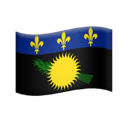
πŸ‡¬πŸ‡΅ represents the flag of Guadeloupe, which displays a blue top band with three yellow fleur-de-lis and a black lower field containing a yellow sun and green sugar cane. Some designs appear flat and static while others add folds, shading, or wave-like motion to simulate a flag in the wind.

Guadeloupe is an archipelago located in the southern Caribbean Sea and is an overseas region of France. The yellow sun and sugar cane symbolize the island's tropical environment and its historical agricultural roots, while the fleur-de-lis elements denote its French heritage.

This emoji is often used in social media and messaging to denote local identity, travel to the Lesser Antilles, or participation in regional sporting events. It serves as a visual shorthand for the unique culture and geography of the islands.
Groups
Subgroups
Unicode
U+1F1EC U+1F1F5
Variant status
Fully-qualified
Emoji version

Platform rendering differences

flag: Guadeloupe appearance on Apple

Apple

flag: Guadeloupe appearance on Twemoji

Twemoji

Apple Emoji icons and related visual assets shown here are the property and registered trademarks of Apple Inc. They are included only for commentary, comparison, and informational purposes, not for commercial use.

You may also want to check out

Related emojis that share similar meanings or usage.

πŸ‡²πŸ‡Ά
flag: Martinique

πŸ‡²πŸ‡Ά represents the flag of Martinique, which uses a white cross to divide a dark blue field into four quadrants, each containing a white 'S' shaped snake. Some designs appear flat and static while others add folds, shading, or wave-like motion to simulate a flag in the wind. Martinique is a French overseas department located in the Lesser Antilles of the eastern Caribbean Sea. The white snakes in the design represent the fer-de-lance, a venomous viper native to the island, arranged within a traditional maritime cross layout. This emoji is often used to signify regional identity during cultural festivals or to denote the island's location in travel-related posts. It serves as a visual shorthand for Martinican heritage in sports, tourism, and Caribbean geography discussions.

πŸ‡¬πŸ‡©
flag: Grenada

πŸ‡¬πŸ‡© represents the flag of Grenada, which includes a red border with six small stars, four internal triangles in yellow and green, and a central red disk with a star. Some designs appear flat and static while others add folds, shading, or wave-like motion to simulate a flag in the wind. Grenada is a sovereign island country in the West Indies, often identified by this vibrant triangular layout. The yellow sections stand for the sun, while the green represents the island's fertile soil, and the nutmeg symbol on the left honors its primary export and cultural heritage. This emoji is commonly used to celebrate national holidays like Independence Day or to denote the country in a geographical context. It is also frequently seen in social media bios to indicate ancestry or to highlight travel experiences in the Caribbean.

πŸ‡―πŸ‡²
flag: Jamaica

πŸ‡―πŸ‡² represents the flag of Jamaica, which consists of a gold diagonal cross dividing the field into four triangles of green and black. Some designs appear flat and static while others add folds, shading, or wave-like motion to simulate a flag in the wind. Jamaica is an island nation located in the Caribbean Sea, and its flag is a powerful emblem of national identity. The gold saltire represents the sun, while the green sections symbolize the lush vegetation and the black sections signify the historical hardships overcome by the population. This emoji is frequently used to celebrate the country's world-class athletic achievements or its influential music scene. It is often used in travel contexts or to signal pride during independence day celebrations.

πŸ‡­πŸ‡Ή
flag: Haiti

πŸ‡­πŸ‡Ή represents the flag of Haiti, which consists of two horizontal bands of blue and red with a white square in the center containing a palm tree and various weapons. Some designs appear flat and static while others add folds, shading, or wave-like motion to simulate a flag in the wind. Haiti is located in the Caribbean and has a rich history as a revolutionary republic. The blue and red bands represent the country's population, while the central coat of arms features a palm tree and cannons to signify the strength and readiness to defend national liberty. This emoji is often used to denote Haitian heritage or to mark geographic locations in travel posts. It frequently appears in social media bios and during cultural festivals to celebrate the island's unique identity.

πŸ‡·πŸ‡ͺ
flag: RΓ©union

πŸ‡·πŸ‡ͺ represents the flag of RΓ©union, which has a blue field with a red triangle at the bottom center and four yellow rays radiating toward the edges. Some designs appear flat and static while others add folds, shading, or wave-like motion to simulate a flag in the wind. RΓ©union is an overseas department of France located in the Indian Ocean, known for its dramatic volcanic terrain. The red triangle symbolizes the Piton de la Fournaise volcano, while the blue field and yellow rays represent the sea and the sun, reflecting the island's natural identity and vibrant energy. This emoji is often used to signify local pride, cultural events, or travel experiences on the island. It serves as a clear marker for regional geography and sports representation in digital spaces.