πŸ‡ΈπŸ‡Ώ

flag: Eswatini

Last updated: 04/26/2026

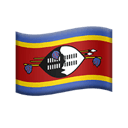
πŸ‡ΈπŸ‡Ώ represents the flag of Eswatini, which consists of horizontal blue, yellow, and red bands with a black-and-white shield and weapons at the center. Some designs appear flat and static while others add folds, shading, or wave-like motion to simulate a flag in the wind.

Eswatini is a kingdom in Southern Africa known for its rich wilderness and traditional festivals. The central Emasotsha shield and spears symbolize the nation's defense, while the red background reflects historical battles and the blue represents peaceful stability.

This emoji is often used to denote national identity in social media bios or to mark geographical locations in travel logs. It frequently appears during regional events or when discussing African cultural history.
Groups
Subgroups
Unicode
U+1F1F8 U+1F1FF
Variant status
Fully-qualified
Emoji version

Platform rendering differences

flag: Eswatini appearance on Apple

Apple

flag: Eswatini appearance on Twemoji

Twemoji

Apple Emoji icons and related visual assets shown here are the property and registered trademarks of Apple Inc. They are included only for commentary, comparison, and informational purposes, not for commercial use.

You may also want to check out

Related emojis that share similar meanings or usage.

πŸ‡ΉπŸ‡Ώ
flag: Tanzania

πŸ‡ΉπŸ‡Ώ represents the flag of Tanzania, which uses a diagonal black band with yellow borders to separate a green triangle on top from a blue triangle below. Some designs appear flat and static while others add folds, shading, or wave-like motion to simulate a flag in the wind. Tanzania is home to Africa's highest peak, Mount Kilimanjaro, and the vast Serengeti plains. The flag's green field stands for the country's lush vegetation, while the black diagonal represents the local population, framed by thin yellow lines denoting mineral prosperity. It is often used to denote national identity in social media bios or to signal travel destinations within East Africa. This emoji frequently appears in discussions regarding wildlife conservation, tourism, and regional diplomatic affairs.

πŸ‡¬πŸ‡²
flag: Gambia

πŸ‡¬πŸ‡² represents the flag of Gambia, which features horizontal stripes of red, white, blue, white, and green. Some designs appear flat and static while others add folds, shading, or wave-like motion to simulate a flag in the wind. Gambia is the smallest country on mainland Africa and is almost entirely surrounded by Senegal. The blue stripe represents the Gambia River, while the white borders signify peace and purity, and the red and green reflect the sun and the land. This color scheme avoids political party symbols, focusing instead on geographic unity. This emoji is often used to denote national identity in social media bios or to highlight West African travel destinations. It is a common sight in digital spaces during regional football tournaments and cultural festivals.

πŸ‡ΏπŸ‡Ό
flag: Zimbabwe

πŸ‡ΏπŸ‡Ό represents the flag of Zimbabwe, which displays seven horizontal stripes of green, yellow, red, and black with a white triangle and a yellow bird on the left. Some designs appear flat and static while others add folds, shading, or wave-like motion to simulate a flag in the wind. Zimbabwe is a landlocked country in Southern Africa known for its diverse wildlife and the majestic Victoria Falls. The Zimbabwe Bird is the national emblem, while the red star represents the nation's future aspirations and the revolutionary struggle for independence. It is often used in digital communication to denote national identity, celebrate local holidays, or highlight cultural and sporting achievements related to the region.

πŸ‡ΏπŸ‡¦
flag: South Africa

πŸ‡ΏπŸ‡¦ represents the flag of South Africa, which features a horizontal green Y-shaped band with white and yellow borders, a black triangle on the left, and red and blue sections. Some designs appear flat and static while others add folds, shading, or wave-like motion to simulate a flag in the wind. South Africa is located at the southern tip of the African continent and is famously known for its rich biodiversity. The green Y-shaped band represents the merging of different cultures and histories into one unified future, reflecting the country's identity as a multi-ethnic society. This emoji is frequently used to express national pride during international sporting matches or to mark geographic locations in travel posts. It is often used to signal cultural topics or to celebrate the heritage of the southern African region.

πŸ‡²πŸ‡Ώ
flag: Mozambique

πŸ‡²πŸ‡Ώ represents the flag of Mozambique, which includes horizontal green, black, and yellow bands with a red triangle containing a star, book, hoe, and rifle. Some designs appear flat and static while others add folds, shading, or wave-like motion to simulate a flag in the wind. Mozambique is a coastal nation in Southern Africa known for its extensive Indian Ocean shoreline. The flag elements symbolize a commitment to national defense through the rifle, the importance of education via the open book, and the agricultural foundations represented by the hoe. This emoji is often used to signify Mozambican heritage or to mark geographical locations in travel posts. It frequently appears in international sports threads or cultural exchanges to represent the country's unique history and identity.