flag: Djibouti

πŸ‡©πŸ‡―

flag: Djibouti

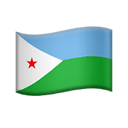
πŸ‡©πŸ‡― represents the flag of Djibouti, which displays horizontal bands of light blue and green with a white isosceles triangle at the left containing a red five-pointed star. Some designs appear flat and static while others add folds, shading, or wave-like motion to simulate a flag in the wind.

Djibouti is located in the Horn of Africa and serves as a vital maritime hub. The light blue represents the sea and sky, the green signifies the earth, and the red star stands for unity and the struggle for independence. These elements combine to reflect the nation's geographic and social identity.

This emoji is often used to denote national pride, identify the country in geographic lists, or mark travel milestones. It is also frequently seen in social media bios to indicate cultural heritage or during global athletic competitions.
Groups
Subgroups
Unicode
U+1F1E9 U+1F1EF
Variant status
Fully-qualified
Emoji version
E2.0

You may also want to check out

Related emojis that share similar meanings or usage.

πŸ‡ΉπŸ‡©
flag: Chad

πŸ‡ΉπŸ‡© represents the flag of Chad, which consists of three vertical bands in blue, yellow, and red. Some designs appear flat and static while others add folds, shading, or wave-like motion to simulate a flag in the wind. Chad is a vast landlocked country in North-Central Africa where the blue stripe signifies the sky and hope, the yellow stripe represents the sun and the northern desert, and the red stripe symbolizes the blood shed for independence. This tricolor layout mirrors the French flag's structure while utilizing Pan-African colors to reflect local identity and history. This emoji is often used in digital contexts to denote Chadian citizenship, cultural heritage, or participation in international events. It serves as a clear geographical marker for topics related to the Sahel region or Chadian diplomacy.

πŸ‡ΈπŸ‡΄
flag: Somalia

πŸ‡ΈπŸ‡΄ represents the flag of Somalia, which consists of a solid blue horizontal field with a single white five-pointed star centered in the middle. Some designs appear flat and static while others add folds, shading, or wave-like motion to simulate a flag in the wind. Somalia is located on the Horn of Africa and is known for having the longest coastline on the continent's mainland. The blue field honors the United Nations for its historical support, while the white star symbolizes the unity of the Somali people across different regions. This emoji is often used to denote national identity, cultural heritage, or to represent the country in a geographic and travel context. It frequently appears in social media bios and sports discussions to show solidarity and pride.

πŸ‡©πŸ‡Ώ
flag: Algeria

πŸ‡©πŸ‡Ώ represents the flag of Algeria, which is divided into a green left half and a white right half with a red crescent and star at the center. Some designs appear flat and static while others add folds, shading, or wave-like motion to simulate a flag in the wind. Algeria is the largest country in Africa and is known for its vast Saharan landscapes and Mediterranean coastline. The green and white layout highlights the historical and religious foundations of the nation, while the red crescent serves as a primary symbol of faith and independence. This emoji is often used to express national pride or to mark geographic locations in North Africa. It is also frequently seen in digital conversations regarding Mediterranean culture, history, or international athletic competitions.

πŸ‡ΉπŸ‡³
flag: Tunisia

πŸ‡ΉπŸ‡³ represents the flag of Tunisia, which contains a red field with a white circle in the center enclosing a red crescent and a five-pointed star. Some designs appear flat and static while others add folds, shading, or wave-like motion to simulate a flag in the wind. Tunisia is the northernmost country in Africa, situated along the Mediterranean coast. The red crescent and star are central symbols of the nation's heritage, while the red background is often associated with the resistance against Ottoman and French influence to achieve national sovereignty. This emoji is often used to signify Tunisian identity in social media bios or to celebrate cultural achievements. It is also frequently seen in sports contexts or when discussing North African tourism and geography.

πŸ‡¬πŸ‡²
flag: Gambia

πŸ‡¬πŸ‡² represents the flag of Gambia, which features horizontal stripes of red, white, blue, white, and green. Some designs appear flat and static while others add folds, shading, or wave-like motion to simulate a flag in the wind. Gambia is the smallest country on mainland Africa and is almost entirely surrounded by Senegal. The blue stripe represents the Gambia River, while the white borders signify peace and purity, and the red and green reflect the sun and the land. This color scheme avoids political party symbols, focusing instead on geographic unity. This emoji is often used to denote national identity in social media bios or to highlight West African travel destinations. It is a common sight in digital spaces during regional football tournaments and cultural festivals.