flag: Congo - Brazzaville

๐Ÿ‡จ๐Ÿ‡ฌ

flag: Congo - Brazzaville

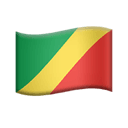
๐Ÿ‡จ๐Ÿ‡ฌ represents the flag of Congo - Brazzaville, which features a diagonal yellow band running from the bottom-left to the top-right, separating a green upper-left triangle from a red lower-right triangle. Some designs appear flat and static while others add folds, shading, or wave-like motion to simulate a flag in the wind.

The Republic of the Congo is located in Central Africa and is home to a significant portion of the Congo Rainforest. The diagonal band structure is a distinct visual marker, where the green section represents nature, yellow symbolizes the sun, and red reflects the national spirit.

This emoji is commonly used to denote national identity during international football matches or cultural festivals. It is also frequently applied in travel contexts to specify a destination within the Congo River region.
Groups
Subgroups
Unicode
U+1F1E8 U+1F1EC
Variant status
Fully-qualified
Emoji version
E2.0

You may also want to check out

Related emojis that share similar meanings or usage.

๐Ÿ‡จ๐Ÿ‡ฉ
flag: Congo - Kinshasa

๐Ÿ‡จ๐Ÿ‡ฉ represents the flag of Congo - Kinshasa, which features a sky-blue field with a yellow star in the upper left and a diagonal red stripe bordered by thin yellow lines. Some designs appear flat and static while others add folds, shading, or wave-like motion to simulate a flag in the wind. The Democratic Republic of the Congo is the second-largest country in Africa by land area. The sky-blue background stands for peace, the red represents the blood of martyrs, and the yellow star is a symbol of national unity and a prosperous future. This emoji is commonly used to denote national identity in digital bios or to mark geographical locations in travel posts. It is often used during international sporting events or to celebrate Congolese cultural heritage.

๐Ÿ‡จ๐Ÿ‡ฒ
flag: Cameroon

๐Ÿ‡จ๐Ÿ‡ฒ represents the flag of Cameroon, which features three vertical stripes of green, red, and yellow with a yellow five-pointed star in the center. Some designs appear flat and static while others add folds, shading, or wave-like motion to simulate a flag in the wind. Cameroon is a Central African nation known for its diverse terrain and rich wildlife. The green stripe represents the lush vegetation of the south, the red symbolizes unity, and the yellow stands for the sun and the savannas of the north, while the Star of Unity sits at the heart of the design. This emoji is commonly used to denote national identity in social media bios or to cheer for the country during global sporting events. It is often used to mark travel itineraries or cultural discussions related to the region.

๐Ÿ‡จ๐Ÿ‡ซ
flag: Central African Republic

๐Ÿ‡จ๐Ÿ‡ซ represents the flag of Central African Republic, which displays four horizontal bands of blue, white, green, and yellow split by a central vertical red stripe and a yellow star in the top left. Some designs appear flat and static while others add folds or wave-like motion to simulate a flag in the wind. Located in the heart of the continent, the Central African Republic uses this multicolor layout to bridge historical ties with France and the broader Pan-African movement. The yellow star in the blue band is a guide for the nation toward a future of freedom and progress, serving as a primary national symbol of hope. This emoji is often used in social media bios to denote heritage or to mark locations in travel posts. It serves as a clear indicator of national identity during global events and regional cultural celebrations.

๐Ÿ‡ฆ๐Ÿ‡ด
flag: Angola

๐Ÿ‡ฆ๐Ÿ‡ด represents the flag of Angola, which displays two horizontal bands of red and black with a yellow central emblem of a partial gear, a machete, and a star. Some designs appear flat and static while others add folds, shading, or wave-like motion to simulate a flag in the wind. Angola is a nation in Southern Africa known for its vast natural resources and diverse landscape. The red band signifies the blood of those who fought for independence, while the black band represents Africa; the central emblem specifically highlights the role of workers and peasants through the gear and machete symbols. This emoji is commonly used to express national identity in social media bios or to represent the country in international sports and diplomatic discussions. It is often used by those traveling to the region or celebrating Angolan cultural holidays.

๐Ÿ‡ง๐Ÿ‡ซ
flag: Burkina Faso

๐Ÿ‡ง๐Ÿ‡ซ represents the flag of Burkina Faso, which consists of two horizontal bands of red and green with a yellow five-pointed star in the center. Some designs appear flat and static while others add folds, shading, or wave-like motion to simulate a flag in the wind. Burkina Faso is a landlocked West African nation whose name translates to "Land of Honest People." The red band symbolizes the socialist revolution, the green represents the country's agricultural riches, and the yellow star serves as a guiding light for the citizenry. This emoji is commonly used to denote national identity, cultural pride, or travel to the region. It is often used in sports contexts or when discussing West African geopolitical topics.