flag: Cape Verde

πŸ‡¨πŸ‡»

flag: Cape Verde

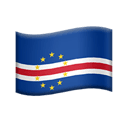
πŸ‡¨πŸ‡» represents the flag of Cape Verde, which consists of a dark blue field with three horizontal stripes of white and red near the bottom and ten yellow stars in a circle. Some designs appear flat and static while others add folds, shading, or wave-like motion to simulate a flag in the wind.

Cape Verde is a volcanic archipelago located in the central Atlantic Ocean. The blue background symbolizes the sea and sky, while the ten stars represent the nation's primary islands arranged in a circle to denote unity. The white and red bands represent the road to the construction of the country through peace and effort.

This emoji is commonly used to express national identity or pride in Cape Verdean heritage. It is often used in travel contexts, maritime topics, or to celebrate the country's unique Creole culture and musical traditions.
Groups
Subgroups
Unicode
U+1F1E8 U+1F1FB
Variant status
Fully-qualified
Emoji version
E2.0

You may also want to check out

Related emojis that share similar meanings or usage.

πŸ‡¨πŸ‡Ό
flag: CuraΓ§ao

πŸ‡¨πŸ‡Ό represents the flag of CuraΓ§ao, which is a blue field with a horizontal yellow stripe across the lower third and two white stars in the upper left. Some designs appear flat and static while others add folds, shading, or wave-like motion to simulate a flag in the wind. CuraΓ§ao is a Caribbean island country recognized for its diverse culture and marine life. The blue background stands for the surrounding sea and sky, while the yellow stripe symbolizes the sun, and the two stars represent the main island alongside Klein CuraΓ§ao. This emoji is frequently used to denote national identity and geographical location. It is often used in social media posts about tropical travel, local festivals, or supporting national sports teams.

πŸ‡¬πŸ‡©
flag: Grenada

πŸ‡¬πŸ‡© represents the flag of Grenada, which includes a red border with six small stars, four internal triangles in yellow and green, and a central red disk with a star. Some designs appear flat and static while others add folds, shading, or wave-like motion to simulate a flag in the wind. Grenada is a sovereign island country in the West Indies, often identified by this vibrant triangular layout. The yellow sections stand for the sun, while the green represents the island's fertile soil, and the nutmeg symbol on the left honors its primary export and cultural heritage. This emoji is commonly used to celebrate national holidays like Independence Day or to denote the country in a geographical context. It is also frequently seen in social media bios to indicate ancestry or to highlight travel experiences in the Caribbean.

πŸ‡¨πŸ‡°
flag: Cook Islands

πŸ‡¨πŸ‡° represents the flag of the Cook Islands, which displays a blue field with a Union Jack in the canton and a circle of fifteen white stars on the right. Some designs appear flat and static while others add folds, shading, or wave-like motion to simulate a flag in the wind. The Cook Islands is a self-governing island country in the South Pacific Ocean in free association with New Zealand. The fifteen stars arranged in a circle signify the unity and equal status of the individual islands, while the blue background represents the surrounding sea and the peaceful spirit of the people. This emoji is commonly used to express national identity during sporting events or to denote the specific geography of the region. It is often used in travel-related posts or when discussing the unique cultural heritage of the Pacific islands.

πŸ‡²πŸ‡Ί
flag: Mauritius

πŸ‡²πŸ‡Ί represents the flag of Mauritius, which displays four horizontal bands of red, blue, yellow, and green. Some designs appear flat and static while others add folds, shading, or wave-like motion to simulate a flag in the wind. Mauritius is a diverse island nation located in the Indian Ocean. The red band symbolizes the struggle for freedom, while blue represents the surrounding ocean, yellow signifies the light of independence, and green reflects the island's lush vegetation. These four bands together represent a unified national identity. This emoji is commonly used to denote Mauritian heritage, travel plans to the island, or support for the nation in global sports. It is often used as a shorthand for Mauritian culture and geographical location.

πŸ‡¦πŸ‡¨
flag: Ascension Island

πŸ‡¦πŸ‡¨ represents the flag of Ascension Island, which uses a dark blue field with the Union Jack in the canton and a local coat of arms on the fly. Some designs appear flat and static while others add folds, shading, or wave-like motion to simulate a flag in the wind. Ascension Island is a remote volcanic location in the South Atlantic known for its significant role in global communications and space tracking. The coat of arms on the right side of the flag features a shield showing the island's rugged peaks and two green sea turtles, which are a major part of the local national identity and ecological heritage. This emoji is often used in maritime, travel, or geographical contexts when referring specifically to this territory. It is also used to represent the island's unique position in international research and conservation circles.