duck

πŸ¦†

duck

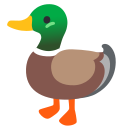
πŸ¦†: duck, typically shown as a duck with a dark green head, a yellow or orange bill, a white neck ring, and a brown chest. The body is light gray or tan, with orange webbed feet.

Ducks are common waterfowl known for their ability to swim, fly, and walk. The specific coloring of this emoji represents the male mallard, which is recognized by its vibrant plumage and orange webbed feet. They are highly social birds that are often found in groups near lakes and rivers.

In digital communication, the duck is a popular choice for lighthearted messages or to express a quirky and fun personality. It is frequently used when discussing nature walks, feeding birds at the park, or simply to add a whimsical touch to a conversation. It can also be used metaphorically to suggest someone is 'ducking' a question or to celebrate a successful 'duck' in sports.

  • You send a random selfie with a silly face.

    just vibin’ πŸ¦†

Subgroups
Unicode
U+1F986
Variant status
Fully-qualified
Emoji version
E3.0

You may also want to check out

Related emojis that share similar meanings or usage.

🐦
bird

🐦: bird, typically shown as a small blue or red bird standing in profile with a rounded body, a short beak, and a long tail. It has dark wing markings, a round eye, and thin legs. Birds are diverse creatures found throughout the world, known for their feathers and ability to fly. They play vital roles in nature as pollinators and seed dispersers, and their unique songs are often the first sign of a new day. Many people associate them with freedom and the boundless sky. In daily messaging, this emoji is frequently used to discuss nature, pets, or early mornings. It is a popular choice for sharing news or secrets, often referencing the idiom 'a little bird told me.' It also appears in social media posts about travel or outdoor activities to convey a sense of lightness and joy.

πŸͺΆ
feather

πŸͺΆ: feather, typically shown as a long brown feather angled from lower left to upper right, with dark stripes along the vane and a pale fluffy base. The edges are smooth, and some designs add a small notch for a more natural look. Feathers are unique structures that serve various biological functions for birds, such as providing warmth and enabling flight. Throughout history, they have also functioned as tools for communication in the form of quills and as sacred objects in many indigenous cultures worldwide. In digital communication, this emoji is frequently used to represent lightness, grace, or the concept of flight. It can be sent to indicate a soft touch or a gentle personality. Additionally, it is popular in creative circles to symbolize writing, literature, and the arts, or to simply express a connection with nature and wildlife.

🐧
penguin

🐧: penguin, typically shown as a black-and-white penguin with a rounded body, a small orange or yellow beak, and flipper-like wings. Some designs show the full body standing sideways, while others use a close-up of the head. Penguins are flightless birds adapted to life in the water. They are celebrated for their tuxedo-like plumage and their ability to thrive in harsh, freezing environments. Their social nature and unique waddling movement make them one of the most recognizable and beloved creatures in the animal kingdom. In digital communication, it is commonly used to discuss cold weather or winter themes. It also fits lighthearted messages about being cute, slightly awkward, or dressed up for a formal event. You might see it in captions like 'Freezing outside 🐧' or 'Feeling like a penguin in this suit!'

πŸ₯
front-facing baby chick

πŸ₯: front-facing baby chick, typically shown as a round yellow chick with a small orange beak, black eyes, and tiny orange feet. Some designs add a little tuft of feathers on top. Front-facing baby chicks are iconic symbols of springtime and new beginnings. Known for their soft downy feathers, these young birds represent the early stages of life and are frequently associated with farm life and the natural world. Their simple, bright appearance makes them a universal emblem of innocence and youth. This emoji is frequently used to express that something is extremely cute or 'kawaii.' It is also a popular choice for Easter-related posts or when discussing a fresh start. You might use it to call yourself a 'newbie' in a playful way or to congratulate someone on a new arrival, such as saying 'Welcome to the world πŸ₯!'

🦊
fox

🦊: fox, typically shown as an orange fox head with pointed ears, a white muzzle and cheeks, and a small dark nose. The face is usually front-facing and easy to recognize. Foxes are highly adaptable wild canines famous for their resourcefulness and cleverness. In everyday online use, the fox often symbolizes intelligence, a playful spirit, or a sense of mischief. It is also a popular choice for representing the autumn season due to its vibrant orange and white color scheme. In chats and social posts, it fits lines like "That was a clever move, you're as smart as a fox 🦊" when praising someone's quick thinking. It can also be used for seasonal moods, such as "Cozy sweaters and autumn leaves πŸ¦ŠπŸ‚ are finally here." For nature lovers, it works in captions like "Caught a glimpse of a beautiful fox 🦊 on my morning hike today."