customs

๐Ÿ›ƒ

customs

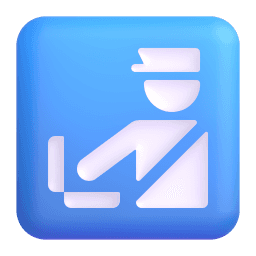
๐Ÿ›ƒ represents customs, typically shown as a customs checkpoint with an officer behind a counter. The officer is shown in profile wearing a peaked cap and uniform, often reaching toward a document or bag.

Customs is used to identify the official checkpoints where travelers and goods are examined by government authorities to ensure compliance with import and export laws. It serves as a functional marker for administrative zones in international transit points, emphasizing the regulatory aspect of travel.

In practical communication, this emoji is used to discuss border procedures or airport navigation. Common examples include: "I am stuck in ๐Ÿ›ƒ because of the long line," "Make sure you have your declaration forms ready for ๐Ÿ›ƒ," or "The ๐Ÿ›ƒ area is located just after baggage claim."
Groups
Unicode
U+1F6C3
Variant status
Fully-qualified
Emoji version
E1.0

You may also want to check out

Related emojis that share similar meanings or usage.

๐Ÿ›„
baggage claim

๐Ÿ›„ represents baggage claim, typically shown as a suitcase on a conveyor belt with a handle and stripes. Baggage claim is a functional sign used primarily in transportation hubs like airports and train stations to mark the area where passengers collect their belongings from a moving carousel. It employs a minimalist aesthetic to ensure the message is understood instantly regardless of the viewer's native language. In practical use, this symbol frequently appears in travel-related messages or navigational contexts. For instance, one might say "Meet me at the ๐Ÿ›„ area," "I am still waiting for my suitcase at ๐Ÿ›„," or "Follow the ๐Ÿ›„ signs to exit the terminal."

๐Ÿ›…
left luggage

๐Ÿ›… represents left luggage, typically shown as a suitcase with a key above it. Designs vary in the frame and suitcase style, with some using a boxed sign and others a simpler outline. Left luggage is a functional sign used to indicate facilities where travelers can temporarily store their bags or suitcases. It combines the imagery of a key and a bag to clearly communicate the concept of secure storage and lockers. In everyday communication, ๐Ÿ›… is used when discussing travel logistics or locating storage services. For example: "You can drop your bags at the ๐Ÿ›… station," "Is there a ๐Ÿ›… near the main entrance?" or "Look for the ๐Ÿ›… sign to store your heavy gear."

๐Ÿ›‚
passport control

๐Ÿ›‚ represents passport control, typically shown as an officer in a peaked cap holding a document for inspection. Passport control is used to denote the area in airports or at land borders where travelers must present their identification and travel permits for inspection. It serves as a functional guide for navigation in international transit hubs, ensuring that passengers can easily locate immigration services. In digital communication, this icon is frequently used when discussing travel logistics or arrival procedures. Common usage examples include: "Just landed and heading to ๐Ÿ›‚ now," "The line at ๐Ÿ›‚ was incredibly long today," or "Don't forget to have your documents ready for ๐Ÿ›‚."

๐Ÿšฎ
litter in bin sign

๐Ÿšฎ represents litter in bin sign, typically shown as a person putting waste into a bin. The sign is usually shown as a blue rounded rectangle with a white figure and small trash shapes. Litter in bin sign is used globally to identify waste disposal locations and to encourage people to keep their surroundings clean. It is a functional indicator found in airports, streets, and digital maps to denote environmental maintenance zones. In practical communication, this symbol is used to remind others of cleanliness or to point out facility locations. Common usage includes messages like "Please put your wrappers in the ๐Ÿšฎ," "Looking for a ๐Ÿšฎ nearby," or "Make sure to use the ๐Ÿšฎ after the picnic."

โœ”๏ธ
check mark

โœ”๏ธ represents check mark, typically shown as a check mark with a short left stroke and a longer right stroke. Designs vary in shading and shape, with some appearing flat and others slightly three-dimensional. A check mark is a functional symbol used to indicate approval, verification, or the completion of an action. It serves as a visual shorthand for 'yes' or 'correct' across various digital platforms and physical documents, helping to organize information and provide feedback. In practical communication, the symbol is used to signal that things are under control or finished. Common examples include: "I have finished the report โœ”๏ธ," "Everything on the list is done โœ”๏ธ," or "Please โœ”๏ธ the boxes that apply to you."