Last updated: 06/13/2026

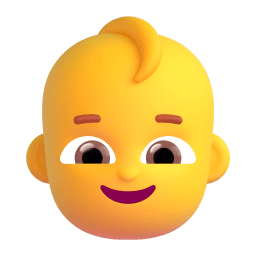
πŸ‘Ά baby, usually shown as a baby’s face with round eyes, a small nose, and a tuft of hair on top.

The baby emoji is commonly used to represent newborns, infants, and toddlers. It can refer to pregnancy announcements, baby showers, parenting, or childhood in general. It gives a warm and adorable feeling, often appearing in sweet messages about family additions or when describing someone acting childishly.

In chats and captions, you can use it for a family announcement, such as "We are so excited to welcome our new baby πŸ‘Ά into the world!" When preparing for an event, you could write "Shopping for the upcoming baby πŸ‘Ά shower this weekend." For a playful comment about a friend, it can also appear in "Stop being such a baby πŸ‘Ά and just try the roller coaster."

Subgroups
Unicode
U+1F476
Variant status
Fully-qualified
Emoji version

Platform rendering differences

baby appearance on Apple

Apple

baby appearance on Microsoft

Microsoft

baby appearance on Twemoji

Twemoji

baby appearance on Noto

Noto

Apple Emoji icons and related visual assets shown here are the property and registered trademarks of Apple Inc. They are included only for commentary, comparison, and informational purposes, not for commercial use.

You may also want to check out

Related emojis that share similar meanings or usage.

πŸ‘ΆπŸ½
baby: medium skin tone

πŸ‘ΆπŸ½ baby: medium skin tone is the medium skin tone variant of emoji baby(πŸ‘Ά); it is usually shown as the face of a medium skinned baby with round eyes, a small nose, and a tuft of hair on top. The baby emoji is commonly used to represent newborns, infants, and toddlers. It can refer to pregnancy announcements, baby showers, parenting, or childhood in general. It gives a warm and adorable feeling, often appearing in sweet messages about family additions or when describing someone acting childishly. In chats and captions, you can use it for a family announcement, such as "We are so excited to welcome our new baby πŸ‘ΆπŸ½ into the world!" When preparing for an event, you could write "Shopping for the upcoming baby πŸ‘ΆπŸ½ shower this weekend." For a playful comment about a friend, it can also appear in "Stop being such a baby πŸ‘ΆπŸ½ and just try the roller coaster."

πŸ‘ΆπŸ»
baby: light skin tone

πŸ‘ΆπŸ» baby: light skin tone is the light skin tone variant of emoji baby(πŸ‘Ά); it is usually shown as a baby’s face with round eyes, a small nose, and a tuft of hair on top. The baby emoji is commonly used to represent newborns, infants, and toddlers. It can refer to pregnancy announcements, baby showers, parenting, or childhood in general. It gives a warm and adorable feeling, often appearing in sweet messages about family additions or when describing someone acting childishly. In chats and captions, you can use it for a family announcement, such as "We are so excited to welcome our new baby πŸ‘ΆπŸ» into the world!" When preparing for an event, you could write "Shopping for the upcoming baby πŸ‘ΆπŸ» shower this weekend." For a playful comment about a friend, it can also appear in "Stop being such a baby πŸ‘ΆπŸ» and just try the roller coaster."

πŸ‘ΆπŸΌ
baby: medium-light skin tone

πŸ‘ΆπŸΌ baby: medium-light skin tone is the medium-light skin tone variant of emoji baby(πŸ‘Ά); it is usually shown as a baby’s face with round eyes, a small nose, and a tuft of hair on top, with medium-light skin tone. The baby emoji is commonly used to represent newborns, infants, and toddlers. It can refer to pregnancy announcements, baby showers, parenting, or childhood in general. It gives a warm and adorable feeling, often appearing in sweet messages about family additions or when describing someone acting childishly. In chats and captions, you can use it for a family announcement, such as "We are so excited to welcome our new baby πŸ‘ΆπŸΌ into the world!" When preparing for an event, you could write "Shopping for the upcoming baby πŸ‘ΆπŸΌ shower this weekend." For a playful comment about a friend, it can also appear in "Stop being such a baby πŸ‘ΆπŸΌ and just try the roller coaster."

πŸ§’
child

πŸ§’ child, usually shown as the face of a child with short hair and simple facial features. The child emoji is commonly used to represent young children, offspring, or youth in general. It can refer to family life, parenting, early childhood education, or a sense of youthful curiosity. It gives a warm and gentle feeling, making it ideal for discussions about kids of any gender or looking back at childhood. In chats and captions, you can use it for a parenting update, such as "Taking my sweet child πŸ§’ to the park for some fresh air." When talking about family, you could write "My sister just had a beautiful baby, and now there is a new child πŸ§’ in the family." For school-related topics, it can also appear in "The local school is hosting a fun day for every young child πŸ§’ in the neighborhood."

πŸ‘ΆπŸΏ
baby: dark skin tone

πŸ‘ΆπŸΏ baby: dark skin tone is the dark skin tone variant of emoji baby(πŸ‘Ά); it is usually shown as a baby’s face with round eyes, a small nose, and a tuft of hair on top, with dark skin tone. The baby emoji is commonly used to represent newborns, infants, and toddlers. It can refer to pregnancy announcements, baby showers, parenting, or childhood in general. It gives a warm and adorable feeling, often appearing in sweet messages about family additions or when describing someone acting childishly. In chats and captions, you can use it for a family announcement, such as "We are so excited to welcome our new baby πŸ‘ΆπŸΏ into the world!" When preparing for an event, you could write "Shopping for the upcoming baby πŸ‘ΆπŸΏ shower this weekend." For a playful comment about a friend, it can also appear in "Stop being such a baby πŸ‘ΆπŸΏ and just try the roller coaster."